


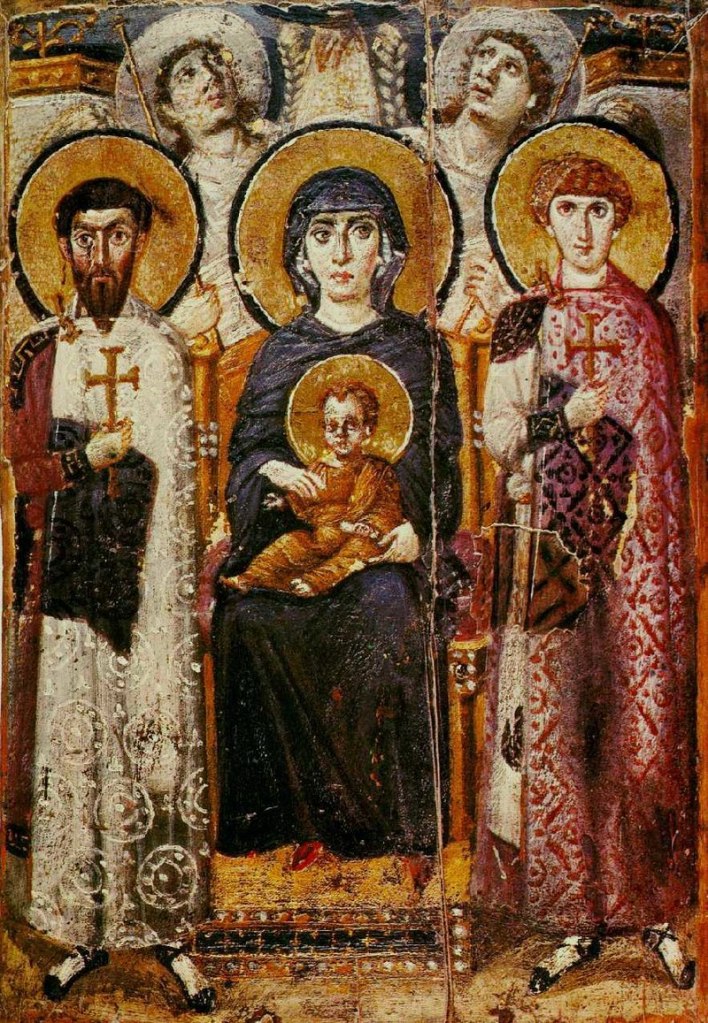
This is a very interesting question. Why should one study Byzantine history. There are many reasons to consider. Still, one should ask this question about any other nation or empire. Studying history helps you to find patterns and understand hidden aspects of history. History is more than just textbooks and dusty manuscripts. It is a living, breathing story. It provides you with important insights into how cultures lived their lives in the past. That may seem boring to some people. They might only be interested in learning about the present. Though, there is much to learn from societies that long since past. This is one of the reasons that I like watching old movies and reading old books. I like learning about cultures in the past and how human beings interacted with one another.
But why specifically Byzantine history? I like reading about Byzantine history because it is obscure. There is something about an obscure history topic that makes it all the more interesting to read about. Topics such as British history are over saturated with attention. I do enjoy reading about British history. However, many historians and writers have already spent so much ink on it. Same with Roman history, which I have read copious amounts about.
Byzantine history is obscure and unique. You get to read about how a society adapts to changing circumstances. It does so without losing sight of what made its culture strong. I am reading a book called Constantinople by Johnathan Harris and its great. It tells a tale of the capital city of the Byzantine Empire and how vibrant it was. To me, this is an incredibly interesting story. There is something very special about the city. The allure comes from the combination of Christian morality with its Roman ancestry. The story of the Byzantines combines these two things. I have great passion for them. It is great that historians are starting to pay attention to the story of the Christian Roman Empire.
When I was school, we generally would learn about the Romans but hardly about the Byzantines. Byzantine history should be taught more often. I think that Americans can get exposure to Eastern Orthodox religion. They can also learn about culture. I believe that Byzantine history would be the right way to do it. I understand that Americans tend to not be interested in global topics. However, the Christian heritage of the Byzantine Empire could be a great hook. It might get people more interested in reading the history of this great empire.
Byzantine history is also somewhat more interesting than Roman history. The Roman Empire has been deeply explored and understood through the writings of many people. People have been intrigued by the story of Rome for many centuries. They even incorporate its architecture into their own cities. The Byzantine empire has been unwisely been ignored by scholars. I believe this happens because anything past the Roman era is set in the dark ages. This perception could not be further from the truth about the Byzantines. The Byzantine empire managed to keep many of the classical texts from their history. This retention is one of the reasons that we still have works from Aristotle, for example. The Byzantines also had one of the strongest economies in the Middle Ages. The Eastern part of the Roman Empire was more urbanized. It could better bribe its rivals to preserve state survival. The story of the Byzantine state is one of resilience and strength through changing circumstances.
The longevity of the Byzantine State makes it attractive to study. This is not the only reason but it ranks up high as why I am passionate about it.
The Byzantines have been ignored for too long and there is so much that one can learn from them. Maybe we can get some hints as to how maintain a state in arduous circumstances.
 Byzantine-Empire.com