


Emperor Basil II was one of the most effective rulers of the Eastern Roman Empire. He managed to survive several rebellions, conquer the arch-rival, Bulgaria, and improve the lives of the common people. Overall, he was the right emperor for the right time. However, what about the generation after him? In my opinion, they squandered everything that he bulit; he is not blameless either, considering that he didn’t have an heir and may have overextended the empire. However, the generation after Basil II is interesting because it shows what happens in the aftermath of an empire reaching its apex. It’s almost as if empires have to go through cycles of instability after their great rise; they are almost like biological beings. It’s a case study in the way how empires rise and fall and the personalities behind them.
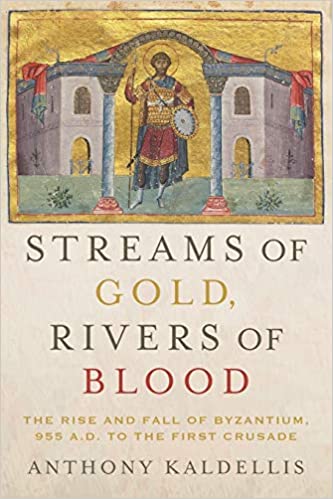
I have already discussed Constantine VIII’s reign. I do not have primary sources that tell what Basil II thought about his brother, but I believe he probably thought that he was simply living in the shadow of him, trying to relax on the laurels that he was building. What a wasted opportunity to consolidate what Basil II had built. Anthony Kalldellis makes a great statement in his great book, Streams of Gold, Rivers of Blood: The Rise and Fall of Byzantium, 955 AD to the First Crusade, calls him an ”unremarkable coda”. While Basil II was dealing with rebellions and fighting the Bulgarians, Constantine VIII preferred feasting and horse-riding. His reign was one of a non-entity in comparison to that of his brother. If Basil II could rise from his tomb, he probably would have his brother blinded and sent to monastery. Then he would make sure certain reforms, like his tax on the nobility that was established to help the peasantry, would continue. He would make sure that the army was kept well-funded and that political rivals in the military aristocracy would be kept at bay.
Romanos III was another unremarkable emperor who was living in the shadow of Basil II. He attempted to gain glory by attacking the nominal vassals of the empire, The Emirate of Aleppo. It ended in a disaster and almost resulted in the emperor being captured by the Muslims. Basil II would probably face-palming at the fact that Romanos had destabilized the diplomatic positioning of the Roman Empire in the East.

The only true extension of Roman territory that occurred after Basil II was the annexation of Ani from the Armenian Kingdom. Overall, this was successful but represented the apex of Roman power in the East. Of course, Basil II would not think much of the annexation. His conquests of Bulgaria were definitely longer lasting than that of the annexation of Ani, which be reversed by the Seijuk Turks in a few years. Anthony Kalldellis has this to say about the annexation of Ani, which came about by cunning Eastern Roman diplomacy: “Gagik (the King of the Armenians) Traveled to Constantinople, where he exchanged his title for rich properties and titles.”
Constantine IX’s reign would see the annexation of Ani but also the rise of the accompanied Turks. They created a new Muslim world and struck at Roman Asia Minor at a time when the empire was weakening. Basil II, with his years of experience in campaigning in the army, probably would think that Constantine IX was underestimating the threat posed by the Turks. The creation of the Sejiuk Empire was accompanied by mass migrations of Turkoman nomads towards the West. When the two empires met, the emperor attempted diplomacy. However, it was clear that diplomacy was not going to work so Constantine sent troops to reinforce the borders. However, Roman armies were performing poorly and eventually the war turned into a draw. Constantine IX was simply the improper ruler for the times. It was a time in which there were three empresses and one emperor. This irregular domestic arrangement represented the tangled mess that the Romans found themselves in. In comparison, Basil II kept women at bay and was singularly focused on the glory of the empire.
The empire’s foreign troubles continued in Southern Italy. Norman aggressors were at the gates and taking territory. However, during Constantine’s final year years in power, the true decline of the military would began. According to Kalledellis, Constantine began demoblizing the army in Iberia, a hotspot of future troubles with the Turks. Secondly, Constantine began using tetratreron which money devalued than other gold coins used in the empire. Basil II would sigh again if he were able to see what was going on. He would probably say in Greek: “All these men with the name Constantine. They are nothing like the man they are named after”.
Theodora followed after Constantine and her reign began with retaliation against Constantine’s eunuchs, and other officials. She was the second woman to rule the Roman Empire alone, the first being Irene of Athens. Her sole reign was too short to be remarkable, though she managed to challenge stereotypes of female leaders in that part of the world at the time. Basil II kept women at long distance but I believe that he would think that Theodora was an improvement over Constantine. Despite her sex, I believe Basil II would apperciate someone who gone through as much intrigue as him and managed to gain power at the highest levels of government.
After Theodora, came the end of a dynasty and beginning of an unfortunately unremarkable and incompetent one. Constantine X Doukas, founder of the Doukas dynasty saw the takeover of the remaining Roman territories in Southern Italy and the Balkans would see the loss of Belgrade. It was during years like the empire would need strong leadership that would later be provided by the Kommenoi dynasty but that would have to wait. The empire’s strong leaders laid in the past and now was the time of scheming and double-dealing.
Probably Basil II would want to come down from heaven and set things right He was a man driven to make the empire great; He was practical man with little respect and time for pleasure like the emperors after him. You have to remember that Basil II faced down several rebellions at once and managed to conduct a war against the Bulgarians at the same time. He was an extraordinary man who ranks as one of the best Roman emperors. He would think that his successors, excluding Theodora, were weak men that needed to sent packing to a monastery. His determination and strength are an exemplary example of an empire reaching its apex. It’s almost as if these weak leaders were destined to follow Basil II. History sometimes works in mysterious ways. Overall, Basil II would probably lead a coup in any of the years leading up to Manzikert to restore honor and glory to the empire.
 Byzantine-Empire.com