


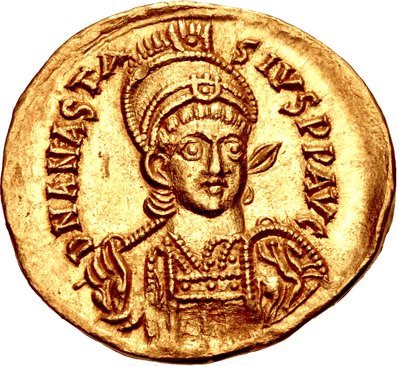

The Byzantine Empire lasted for well over a thousand years and is considered to be one of the longest-lived empires of all time. In that interval of time, there were many emperors who ruled the vast stretches of the empire. Some were great emperors, who managed to expand the territory of the empire; others were mediocre, whose mention looms in the shadows of the greats. Some emperors were terrible, who only brought ruin and destruction to the empire and its institutions. However, which emperors were beyond great? Which emperors brought glory to the empire in a way that only could described as superhuman? Which emperors were so beyond the average, that they weren’t merely great but excellent.
Excellent is a pretty powerful word; who is able to achieve greatness that is endurable and is able to stand the test of time? There are not many rulers who are able to do that. The Byzantine Empire was an empire that based on the idea of the emperor as being divinely appointed. The emperor was supposed to be creating the kingdom of god on Earth and was supposed to be benevolent and able to spread the prosperity of the empire to all his subjects. They were supposed to be acting like a Christian version of Zeus. The emperor had absolute power and was supposed to be able to be able to meet all challenges with resoluteness and the ability to make the empire prosper. The tier list is all about that. What emperors were able to achieve greatness on a level that could not be matched by other emperors? What emperor is able to deliver victory from the jaws of defeat in the most trying situations? That is going to be the point of this exercise to see which emperors make the list of a s-tier list of emperors.
Of course, one of the questions that the dear reader would ask is: What’s the point? Well the point is that it’s a fun exercise. Among history buffs, lists is a great way to exercise one’s mind. Byzantine history is so strange and mysterious and as I have discussed before, it’s almost like we are part of a secret society studying the arcane followings of an ancient society. Making a tier list is all in good fun and all about learning more about history. Some people may find that to be a waste of time but we being history buffs and enthusiasts enjoy spending time with thinking about what emperors were the best and which ones were the worst. I have been enjoying reading and writing about history for many years and writing about S-tier emperors is simply par for the course. It’s not a waste of time and I think everyone can appreciate the exercise in learning about history.
The important thing to remember is to separate the A-tier emperors from the S-tier emperors. A-tier emperors are emperors that are great but are weighed down by several events that damage their reputation. This doesn’t mean that these emperors weren’t great, but they fall short of being extraordinary. This is just my personal opinion of course. There are many ways to rank emperors. One way to rank emperors would be to rank them according to how religious they were. Another ranking would include military triumphs. Another ranking would probably be about economically minded they were. My rankings are a mixture of these criteria and more. One thing that I do not include in this ranking is personality traits. I know that some emperors were simply average but honorable men in the daily lives. I am not going to rank emperors based on that, simply because that’s not my focus. My focus is on whether they managed to advance the Byzantine Empire as a whole. It’s not just about the size of the empire at the time of their passing; there is also the consideration of how the whole empire prospered and whether their actions were contributed to the survival of the Eastern Roman state. This means that emperors who were of great character (at least to modern eyes) but were too weak or incompetent to keep the empire running are not considered s-tier. What matters is whether the empire was still standing and in better shape after they passed the throne to another one of their successors.
Another point: The Timeline of Byzantine Emperors
There is another point that has to be made before diving into the S-tier list. The most important thing is to separate the emperors according to age. I include emperors that start from 395 AD, which is the formal splitting of the empire. Why? Because I consider that to be the true beginning of the Byzantine Empire and that’s one of the reasons that Constantine is not on the list, despite the fact that he would be considered a s-tier emperor. He is the one managed to kick start the whole empire and move the empire onto the road to being Christianized. However, for me, the Byzantine Empire starts at 395 AD and mainly because that’s the formal splitting of the empire into halves. The center of power was shifting to the Eastern part of the empire, and this was emphasized with the capital being moved to Constantinople. For me, Constantine is still part of the original Roman Empire due to the fact that he was still acting out pagan rites and there was still a traditional Roman garb to the Christian identity that was taking over the empire. However, once Christianity becomes the official religion of the Roman Empire, the identity of the Empire starts changing. The Eastern Roman emperors, get their start at the 395 AD split. I also did not want to exclude Justinian as I consider him to be a Christian emperor, even though the empire that he was ruling was still the continuation of the old Roman Empire. It’s the Christian identity that makes the difference. I needed a way to separate the old Pagan emperors from the Christian emperors.
Emperor Justinian

Justinian is an obvious choice for s-tier. Some would argue that he is an a-tier type emperor, due to the argument that he overextended the empire’s resources and was a bit of a tyrant. Those are worthy criticisms of Justinian. He did overextend the empire in a bid to reunite the empire with its western half. However, his conquests greatly helped to maintain the empire’s territorial integrity. He gave the empire an extra shot of adrenaline that it needed. After the era of consolidation, which I would place at about 395 to 527 AD, the Eastern Roman Empire was a state on the upswing. He managed to use the resources of the state in order to restore territory that had been once lost to the barbarians. There is an argument that can be said that the Eastern Roman Empire did not achieve anything with these conquests. I disagree, the Eastern Roman Empire had managed to achieve the unthinkable and restore Italy to its rightful place among the provinces among the empire. This conquest did come at a great cost; Italy was devastated in war and this began its true decline. However, in spite of this, the fact that Justinian was able to achieve with this less troops and resources compared to the old Roman Empire is remarkable achievement. He managed to make a considerable mark on history through this conquest, greatly enlarging the empire in the process.
Justinian and the Hagia Sophia
Overall, on the domestic front, Justinian’s greatest achievement was the construction of one of the greatest monuments in the world, the Hagia Sophia.
This building is truly remarkable and a wonder to behold. It contains a huge dome that is masterfully constructed and holds up to this very day as a piece of architectural brilliance. My opinion is that the consistent presence of the Hagia Sophia is a testament to the greatness of Justinian. He managed to pool together the resources of the state to build something truly beautiful and outstanding. To have this building still standing and in complete condition is a symbol of the glory of his age and endurance of the state through a multitude of crises including war, famine and plague. While some may see the building as a waste of money, there is something unique about devoting one’s energy to building a structure that will outlast your lifetime. The Hagia Sophia is simply one of Justinian’s trademark achievements.
Justinian and the Code of Justinian
Justinian was also responsible for recodifying Roman law into the code of Justinian. This accomplishment would set the standard for future law in contemporary Europe. This proves that the emperor had an impact that was far reaching and beyond his lifetime. To this day, much like the Napoleonic Code, the Code of Justinian serves as blueprint for law in Europe. Justinian’s ability to recodify Roman law was very much a success for him and his reign.
Emperor Basil II
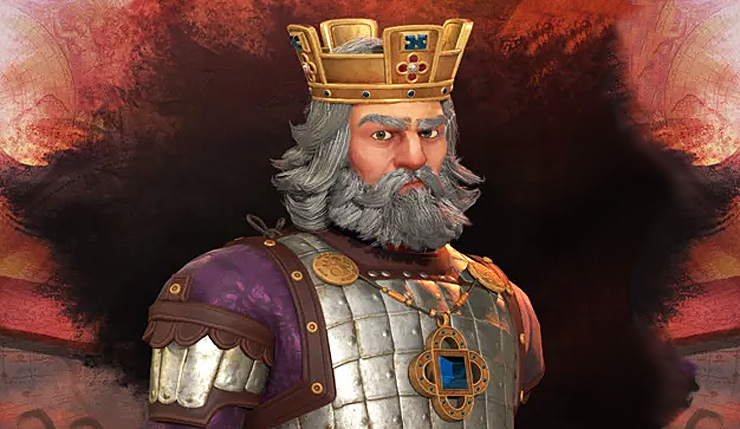
Another obvious choice for s-tier, though he is not as well-known as Justinian. For good reason, Basil II is among one of the best Byzantine Emperors in the history of the empire. He came to power with civil wars ravaging the state. He managed to put the empire back in order and managed to focus one’s attention on external threats. These threats included the Fatimid Caliphate and the Bulgarian Empire. He managed to defeat both of them in open combat and with a competent army and bureaucrats.
Conquering the Bulgarians
Probably Basil II’s greatest achievement was in being able to defeat the Bulgarians. This empire had been dogging the Byzantines for several generations. Just a century before their great defeat at the Battle of Kleidon in 1014 AD, they had routed the Romans in battle under the reign of Constantine VIII. The Bulgarian state was almost like a Western equivalent of the Sassanids. They gave the Romans a run for their money and had besieged the capital on multiple occasions. Despite being less advanced in technology and economy, the Bulgarians managed to punch above their weight on several occasions. However, Basil II represented a total change in the fortunes of the Byzantine Empire. Instead of paying gold to the Bulgarian emperor, the Byzantines would eventually be able to extend their dominion over the whole of Bulgaria, becoming masters of the Balkans once again. This sort of action brought Byzantine rule back to the Danube, something that had not been seen since the days of Heraclius. This is probably one of the most important reasons that Basil II is a s-tier emperor and not just an a-tier emperor. He managed to be able to defeat one of the most powerful rivals of the Byzantine Empire. He did not simply defeat them in pitched battles but wholly incorporating them into the Roman state.
Defeating the Georgians
After defeating the Bulgarians, Basil II would turn his attention to the Georgians. The Georgians were not like the Bulgarians but were still a menace that had to be dealt with. Georgia had assisted Basil II in his struggle against Bardas Phokas in the 970s but eventually they had a falling out. Eventually, Basil II became aware of the treachery of the current Georgian ruler and began a campaign to deal with him. He managed to win several victories before being able to get the surrender of the Armenians and as well as the Georgians.
Dealing with the Aristocracy
Basil II’s rule would also see the emperor be seen as the apex of power during the Middle Ages. This was not done without much difficulty. The empire had seen many civil wars and Basil II’s ability to handle them is one of the greatest examples of his domestic policy. He could have been easily another emperor who simply got deposed. Instead, he took the fight to the enemy and managed to defeat both the rebellions of Bardas Skellros and Bardas Phokas. When Bardas Skelleros was brought before him, the man gave the advice that was akin to ‘trust no one’, keep your governors and generals at bay and allow no women into imperial council. Basil II took this advice to its fullest extent. His reign represents the rebirth of the god emperor that was so powerful during the reign of the Justinian. In some ways, this was to the detriment of the empire. Basil II’s reign is so centered on him that he didn’t take the time to think about succession. In that sense, however, I am not considering that to be a mark against him. He could not forseen the disastrous battle of Manzikert in 1071 and how the Seijuks would cut across Anatolia and begin the Turkification of Asia Minor. He left the empire stronger than he had left it, expanded the borders and left the treasury full for the next generations to squander.
Alexios Kommenos

Comparison with Emperor Heraclius (Who is an a-tier emperor)
Alexios is the third s-tier emperor and I believe that he honestly deserves it. Unlike Heraclius, Alexios was more effective at being able to save the empire from the brink of collapse through a mixture of diplomacy and brilliant military campaigns. The generation after Basil II had squandered the victories that had been made under his reign. They debased the coinage, disbanded the military as to rely on mercenaries and became lethargic and unable to change in accordance to trying circumstances. I compare him to Heraclius because their reigns are very similar to one another, even though they are separated by 400 years of history. Heraclius and Alexios managed to save the empire but only one was truly successful. The reign of Heraclius began in a coup and the reign of Alexios also began with the overthrow of another emperor. The difference is what they were able to leave behind. Alexios managed to leave behind a state that was stronger and more powerful than it had been before. He had also managed to create new alliances with the Latin powers of Western Europe. This alliance would lead to Pope Urban II calling for a crusade in 1096, which helped to greatly stall the Sejiuk advance and helped the empire stave off defeat for yet another century. Not only that, but he managed to survive multiple plots against his dynasty. He could have easily been an emperor that was overthrown like his predecessors. Unlike his predecessors, he managed to survive and allow the empire to continue on for several more centuries. For this reason alone, he is a S-tier emperor.
Reinventing the coinage
The Byzantine Empire had been dealing with high amounts of inflation and the debasement of coinage. The Solidus, which had dated back from the times of Constantine had become largely useless. A new gold coin of higher fineness replaced the solidus, called the hyperpyron. This new currency helped to increase confidence in the monetary system, which in turned allowed for the economic recovery of the Kommenian era.
The Crusades
Another point is that Alexios managed to jump start the Crusades. Unlike Heraclius, whose holy war against the Sassanians would end in failure when the Muslim juggernaut would come out of the Arabian desert, Alexios managed to successfully manage to use diplomacy to have Europe marshal its forces to come aid the Byzantines in their gravest hour.
Why Only Three Emperors?
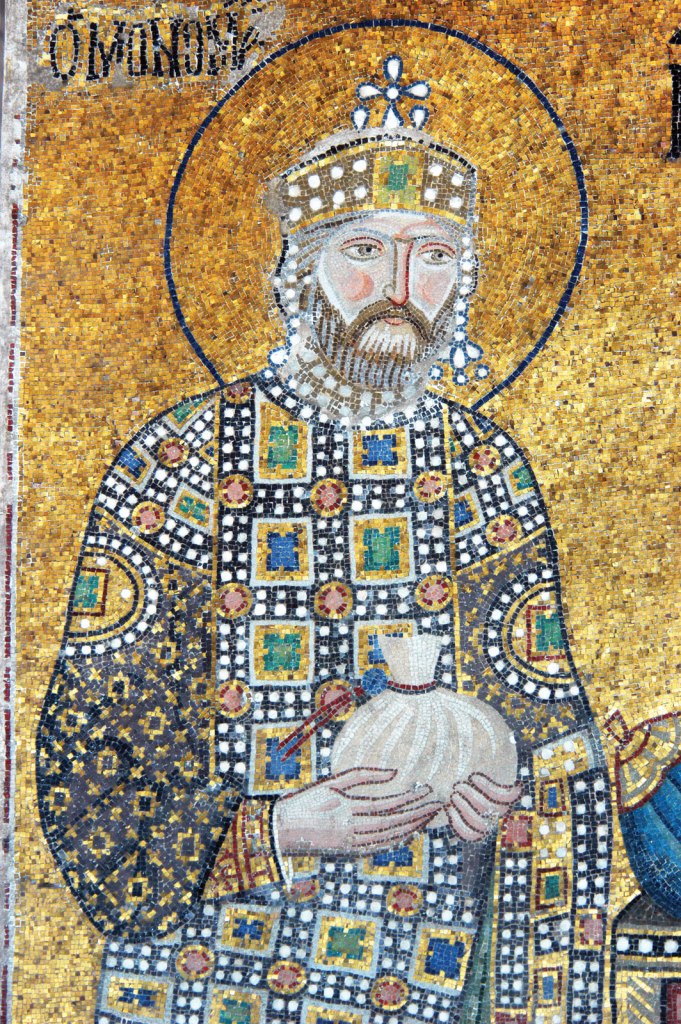
S-Tier is very special. The emperors in this tier would probably be considered the best emperors the empire had in its very long history. Some emperors like Emperor Anastasius who reigned between 491 and 518, were good administrators but they were simply spot-gap rulers before the truly great rulers of the age like Justinian. Anastasius would be considered an A-tier emperor rather than a s-tier emperor. He simply didn’t do anything extraordinary. Heraclius was extraordinary, but he simply was incompetent with the Muslim threat in the latter part of his reign. Unlike with the Sassanians, Heraclius could not bring forth any powers to defeat the Muslims; he let their invasions get the better of him.
Overall, this list is simply my opinion. But I believe I have chosen the emperors that are most capable of being called ”super”.
 Byzantine-Empire.com