


The Roman Empire was not a very kind place to live. They had all sorts of punishments that ranged from the gruesome to the absurd. The Empire had an entire complex of entertainment and games that were connected with the criminal justice system. The Colosseum was indeed the epitome of this. Often as mid-afternoon entertainment, criminals would sent to the beasts. This was done for hundreds of years and much to the approval of the crowds in the arena. One of the most infamous punishments of the Roman era was the Crucifixion, depicted in the painting below. It was this punishment that would launch a globe-spanning religion that would make the crucifixion the symbol of god’s son sacrificing himself for the sins of humans.

With the rise of Christianity, the Empire’s approach to capital punishment began to change. Capital punishment would remain, but its application would change. Gladiatorial games, which had been the trademark of Roman civilization for hundreds of years since the days of the Punic Wars declined in popularity. They were popular means of dispensing with prisoners, but they were eventually banned in the 5th century. Dammnio ad Bestias, or is as translated to English, sent to the beasts, would remain used in the Eastern Roman Empire until the 7th century.
As the Roman Empire transitioned from a pagan society to a Christian society, there were some changes in the way how people approached the divine in their lives and the way they viewed the empire. Previously, Christianity was viewed quite negatively by the Roman state for a variety of reasons. One of those reasons was that Christians put their faith in a divine above that of the Roman Emperor. The Roman state had been pushing the Imperial cult for centuries and forced people to do sacrifices in honor of the emperor. Christians, whose belief system believed that things related to Caesar should belong to Caesar and things that belong to God should belong to God, were in direct opposition to the Roman power structure. The Romans were surprisingly tolerant of many religions, but Christianity was the one religion that they did not like. While perseuctions were rather sparse and spotty throughout the years, Christianity was not a religion that one wanted to be publicly stating to the authorities.
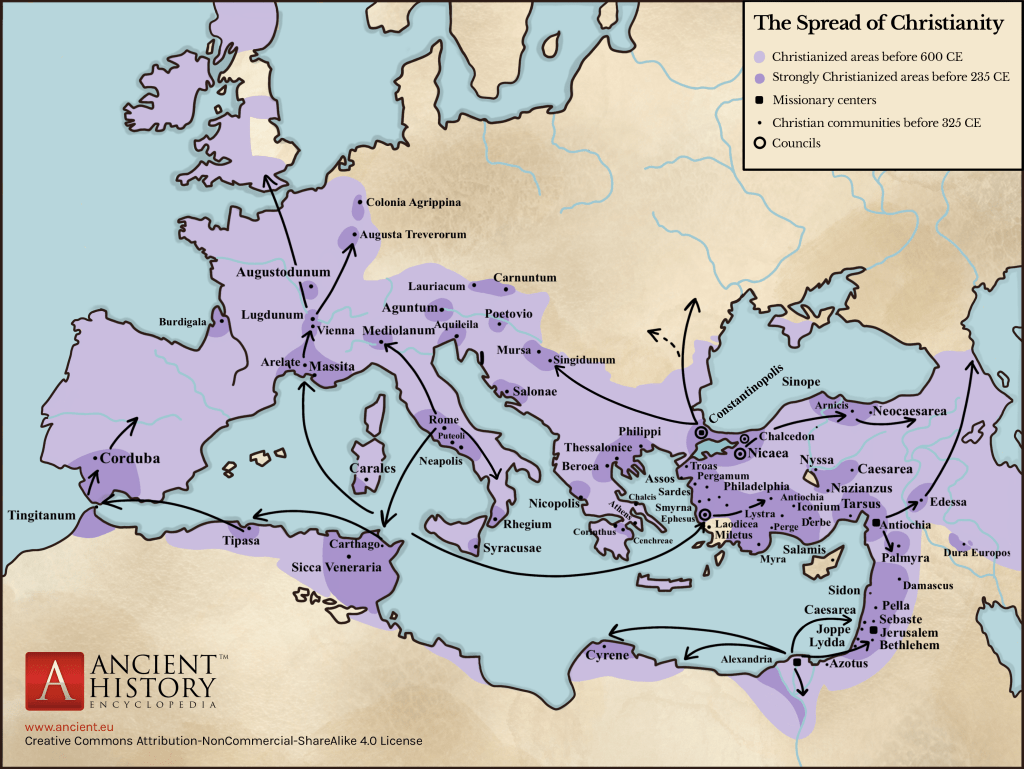
Constantine’s Conversion to Christianity and the Edict of Milan in 313 changed the whole caliculus of how Christians appoarched their relationship to the Imperial state.
Previously, Christians spent their times being on the outside of the Roman mainstream. Trajan’s letter to Pliny shows that the Roman state did not ruthlessly hunt out Christians, but it did not tolerate them either. Persecutions would increase in the Third Century and climax with the Diocletianian persecutions. However, within a span of a couple years, the persecutions would cease and Christianity would become the religion of the Empire.
In this transition period, Christianity was legalized and respected. Constantine continued to shower favors upon the gods of his time, such as Sol Invictius and having coins decorated with pagan symbolism. However, the shift had turned towards Christianity. Constantine may have attributed Christianity to his victory over the Emperor Maxentius but that shift towards Christianity was a gradual process. By the time that Constantine founded the city of Constantinople to be the capital of a New Rome, one dominated by Christianity, the culture still had many pagans who were resisting the influence of the new religion, especially the Senatorial elite. However, it was clear the Christians no longer had to hide their beliefs and the clergy could finally breathe easy and espouse their views and start to influence public policy.
The clergy had been instrumental in their ability to get Christianity so popular among the Roman populace. They had endured hardship and persecution for hundreds of years to get to this triumphal moment in the history of the empire. They had led their flock through difficult times and been inspirational figures to their communities. Now was the time for leadership.
There has been much written about Early Christians and their relationship with Pagans. Some secular people have tried to deingrate early Christianity for ”destroying classical culture”. However, early Christians were innovators in the realm of charity and caring for the poor. This is something that did not exist in Greco-Roman culture. The seculars claim that Christianity stopped the advancement of the sciences, which could not be further from the truth. Christianity was very responsible for the maintenance of the Ancient Greek and Roman tradition. During the Macedonian era, there was a flourishing of Christian teaching merging with Platonism and Aristotle’s teachings. The priests and other religious leaders understood the moment and took full advantage of it. The clergy found themselves having to take responsibility for a huge realm that had no concept of social services or charity at all. With great power meant great responsbility. No longer hiding in the shadows, the clergy became linked the imperial power structure of the Roman Empire.
However, Christians were only human. It is true that they were oppressed, and now they had the power to guide the world to one better suited for god’s purposes. This meant that they were no longer having the privilege of being outside the establishment. They for all and intents and purposes had become the establishment. This outraged the Pagan senators of Rome and elsewhere, who were used to getting their way in the empire.
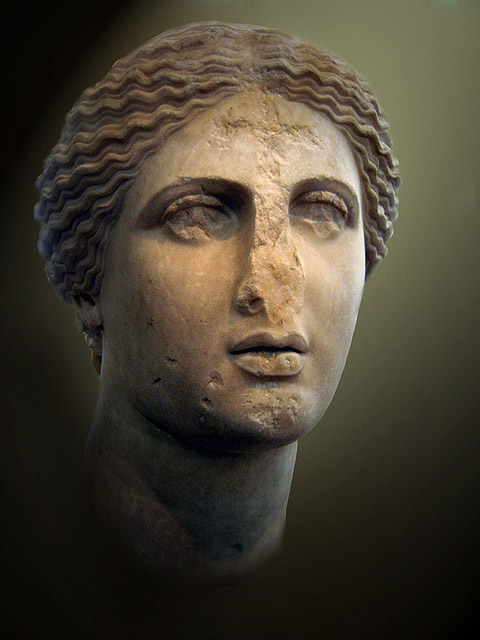
One of the advantages of being outsider is that you are not held to the same standards as the establishment. Christians could spend their times in the shadows, building up their purity as being outside the system. However, as more and more Christians became involved with government, some became corrupted by the system. Some of the clergy ended up having huge estates and buildings constructed for them. This sort of disconnect between Christianity’s austere beginnings and its new gilded establishment was jarring for some Christians. While mobs were being directed by the clergy to destroy Pagan temples and statues, some Christians were wondering how to purify themselves in this new era where they had power. In the picture below, you can see how Christianity was morphing into a powerhouse that was cleansing the new era. This statue of Athena or Aphrodite was cleansed of its original nature by having a Christian cross etched upon it.
This is one of the reasons that the Monastic movement got started in the first place. Many Christians were looking for a place where they could purify themselves.
The Christian church always had a strong link with the ascetic life. Jesus’ life provided many Christians with the blueprint for living an ascetic life that was free from the troubles and travails of the planet. The first monks appeared in the Eastern parts of the Empire, in the Christian-heavy regions of Egypt and Syria. These monks followed in the footsteps of Christ, seeking to live solitary lives as ascetics.
Soon monasteries began spreading throughout the empire. One of the most influential figures in the early monastery movement was a man called Pachoimos, a former soldier, who being inspired by the efficiency of Roman Army camps, began founding monasteries for men and women. They followed rules that were compiled by Pachoiomos who created the prototype for the monastery that became dominant throughout the Byzantine Empire.
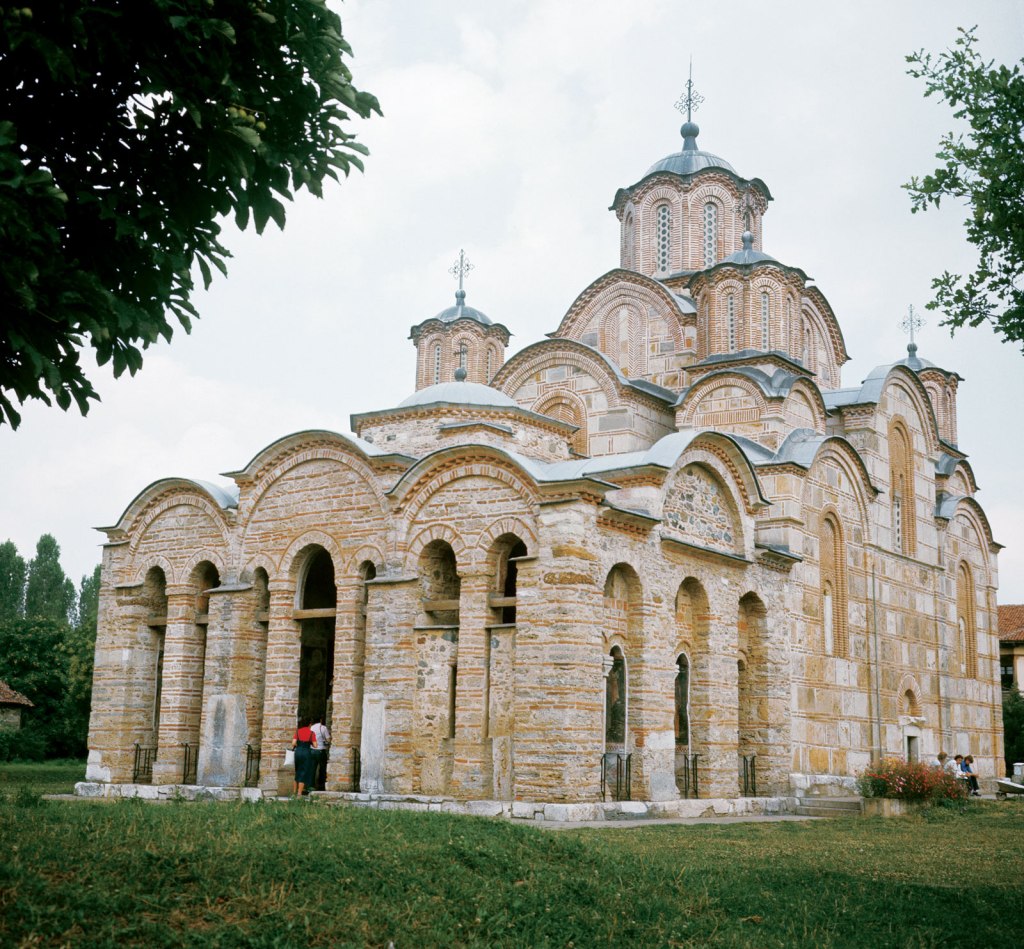
These monasteries became places a worship for the glory of god but they also became involved in the political struggle of the empire.
With the spreading of monasteries across the empire, a new movement began. The old days of Vestal Virgins, the Orcale of Delphi had been replaced by a new morality. The emperors of the Valentinian and the Theodosian dynasties began clawing back the religious toleration that had been established by Constantine. In 395, Theodosius made Christianity the official religion of the Roman Empire. With Christianity being made the official religion, paganism came under increasing attack. Temples were looted and statues desecrated by mobs of Christians.
With the state becoming Christian, there were changes to the legal code. Overall, Crucifixion was made illegal while other forms of punishment remained legal in the empire. Reforms were made to adhere to Christian sensibilities. The emperor Anastatius tried to ban the practice of dammnio ad bestias, brutal punishment that had existed for many years in Rome. The ban would fail though and the punishment would continue to be employed into the 7th century. While the new Christian regime did not outlaw the more brutal punishments, there came new punishments that were colored by Christian thought.
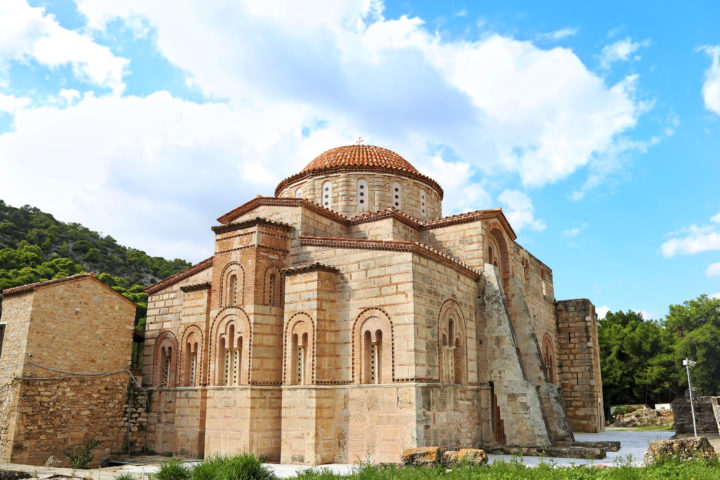
The elites were always governed by different rules. In the purges that characterized the late empire, the executions were characterized by their brutal nature. However, with the rise of Christianity, there emerged a new strain of thought that believed in the spirtual equality of all human beings. They were unequal in the realm of the living but in the realm of the spirits and angels, everyone was equal. This meant that people had to be treated as though they were servants of divine, which meant with respect. Though this was applied in an uneven manner, there was an improvement in the morals surrounding the way how people dealt with their fellow man.
One of these new forms of punishment, was monastic exile or imprisonment. The antecedents were there in history. The Ancient Greeks had chosen exile as one of the means of punishment. This was often done in lieu of an execution. People would be thrown out of the city. The Ancient Romans had plenty of islands where they exiled people to. However, the Eastern Romans invented a new type of punishment, one that was reserved for the elites. It was called Monastic imprisonment. In the sources, we have multiple of instances of the elites being sent to monasteries. Here are some of the examples of this.
Michael I:
This is the first case of an Emperor being sent to a monastery. In this case, this was a voluntary imprisonment in a monastery. He entered a monastery in order to preempt a military coup.
Romanos I: He was arrested by his sons due to a dynastic struggle. He was forced to become a monk on the Prince’s islands.
Michael VI: He was forced to abdicate in favor of becoming a monk. The Patriarch of Constantinople convinced him to do this.
Isaac I Komnenos: He was the first member of the Kommenian dynasty. He was made to be a monk after falling ill during a hunting trip.
Nikephoros III: During a time of trouble for the Byzantine Empire, Nikephoros was one of those type of Emperors who were not up for the job. He had a rebellion from one of the members of the Komnenian dynasty, Alexius. He fled into the great Hagia Sophia before being brought out and forced to become a monk.
John IV Laskaris of Nicaea: Emperor of Nicaea before being being blinded as a child.
Andronikos II Palaiologos: The Palaiologos would have many revolts and civil wars during this time when the Empire was falling apart and being overtaken by the Ottomans. He would lose a civil war to one of his dynastic rivals and would be forced to live in a monastery.
John VI Kantakouzenos: One of the longest-lived Roman Emperors, he was forced to abdicate after administrative mismanagement. He became a monk and became something of a writer in his later years.
This is just the emperors. There many more examples of generals, heirs, women being forced to become monks or nuns. In terms of its morality, I believe that this was a superior form of punishment in comparison to the older Roman forms of punishment. It represented a change in the morality towards human life. Instead of the emphasis on physical punishment, the Byzantines were pioneering a form of punishment that would emphasize exile based on religious grounds. The exile to the monastery had its roots in the law of Justinian who had many law codes administrating punishment as a means of exile versus taking the life of the person. Christianity viewed all humans as equal before god. As such the human being gained a greater sense of purpose than he had originally in the moral universe of the Greco-Roman religion. Being sent to a monastery showed the rulers saw that capital punishment of their rivals was a dangerous thing. In a monastery, moral advancement was seen as an imperative. There was also the added benefit of being to be able to rid of one’s rivals without having to take their lives away. It was seen as an act of mercy, which could help an emperor gain friends and influence during the most important points of his reign.
In this day and age, at least in Western culture, secularization has meant that the religious connotations of exile have been stripped away. Our criminals are generally sent to prisons that are designed with white concrete slabs in mind. There is very little sense of spiritual uplift in such places. For the Eastern Romans, while they may have still retained many of their brutal punishments at least made strides in the humane treatment of the exiled, criminals and prisoners. What this goes to show is that Christianity’s influence on Roman culture was far-reaching even though many aspects of Roman ethics remained in place for centuries after the rise of the religion in the empire.
 Byzantine-Empire.com