


The Byzantine Empire was at its strongest during the reign of Basil II. I consider this time to be the apex of the empire’s strength, militarily, economically and socially. Overall, the empire was experiencing a strong upsurge in its demographics, with the empire becoming denser in its population, especially in Greece and the all-important Anatolian regions. This golden age was built under a foundation that started with the first reigning emperor of the Macedonian dynasty, Basil I and the success of the Byzantine Empire saw its influence expand into all areas of social development, especially in the realm of art.
In comparison, throughout Latin Europe, there was a decline in living standards. As such there was less opportunity for artists to make money. This meant that the quality of art declined, and people had less time to spend into art. There were scattered echoes of brilliance in such as the Carolingian Renaissance and the Anglo-Saxons but there was nothing like the economic environment that prevailed in the Byzantine Empire that allowed for the development of such artwork and literature.
Many Byzantine Emperors, with their newfound wealth and power were able to put their time into the construction of new churches and monasteries. Artists were having a great time being able to finally start working out their dreams on whatever medium they so desired to use.
On a personal note, I do not consider Medieval art to be inferior to Greco-Roman art at all. The medieval were fully capable of making realistic portrayals of people but they decided instead to focus on stylized depictions that showcased exaggerated body proportions. This was largely the style of art that was dominant in Latin Europe for many years until the Italian Renaissance of the 14th and 15th centuries.
The Byzantine Empire on other hand was the inheritor of the Greco-Roman tradition and continued in the development of the art forms that had started during the Roman Republic and Ancient Greece. If you look at the bust of emperors such as Leo II, you can clearly see the continuation of realism being an important part of the Roman tradition. The important thing to remember is that the Byzantines were the Christian Romans and that there was a greater emphasis on placing god at the top of the hierarchy of things compared to the Greco-Roman pagan order.
Even with the statue of Leo II being so prominently featured in histories of this period, the artistry behind statues in the Byzantine Empire was in a state of decline and being replaced by frescoes. This is one of the reasons that you do not see many statues of Justinian, even though his reign was highly consequential for Italy and North Africa.
If we got into the future past Leo II and Justinian and into the reign of Basil I, it is clear that the old trappings of the Roman Republic had largely fallen away. However, this was an age where the art and styles of the Greco-Roman period began being revived across the empire.
Where we see this great influence of the Classical Antiquity on the Byzantine Art works is in the great tapestries and mosaics of the period.
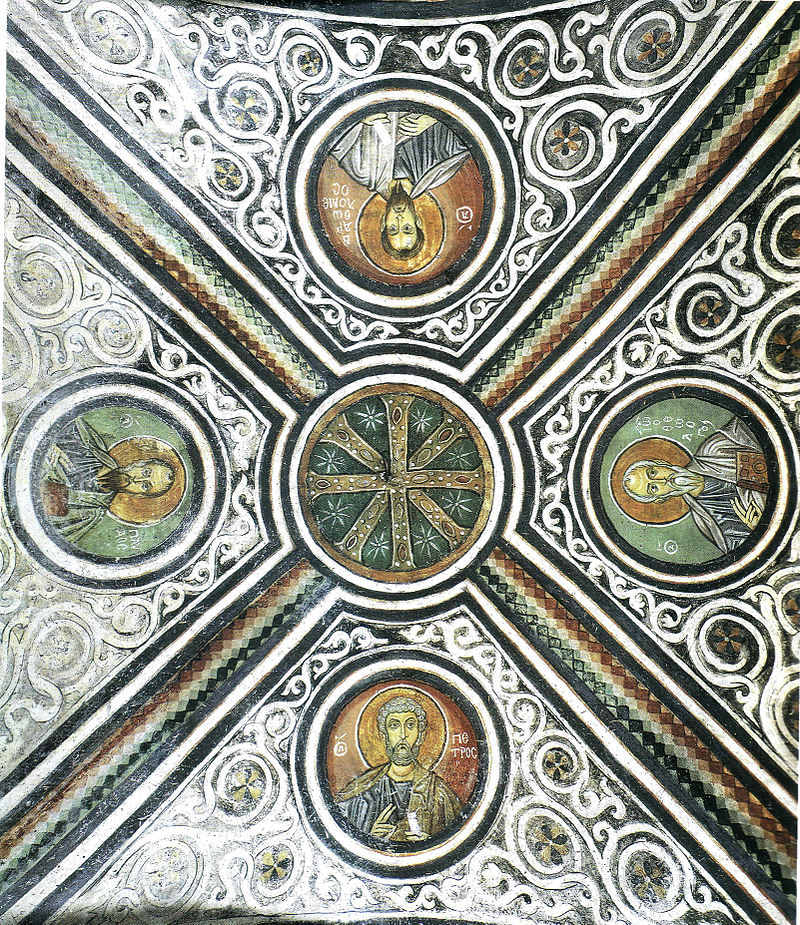
Above you can see the frescoes of Hosios Loukas, which is a famous monastery that was founded by a hermit in the 9th century. In these frescoes you can clearly see the mixture of medieval stylization with Roman realism. One of the important things to remember is that the Byzantines generally did not focus on secular topics and tended to be only interested in the divine topics.
One of the most famous examples of Greco-Roman influence on Byzantine art during this period is the Paris Psalter, which is an illuminated manuscript. The Psalter is a copy of the 150 Psalms of David, translated from Hebrew into Greek. This is one of my most favorite forms of Byzantine art because it shows that Classicism continued to be an important part of the social conversation among artists.
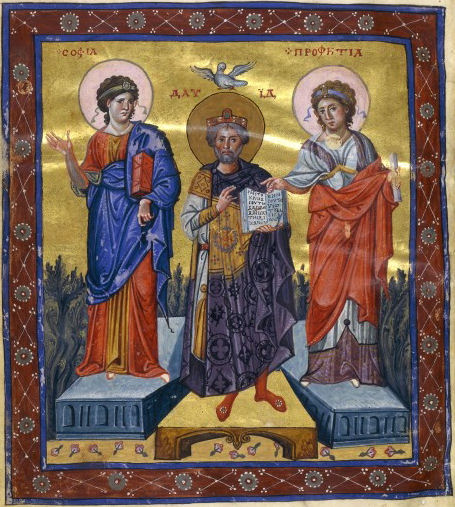
In this particular scene from the Paris Psalter, David is holding a book while being flanked by two female figures. If you look closely at the details, you can see that they are dressed like Ancient Romans from the time of Julius Caesar and Augustus. David in particular looks like a Byzantine Emperor, with his purple robes and crown. Unlike in Medieval art in Latin Europe, there is care to make sure that the faces look realistic.
It wasn’t just the area of illustrated manuscripts that saw the Macedonian Renaissance shine. There were also incredible carvings that revealed continuity with the Roman era.
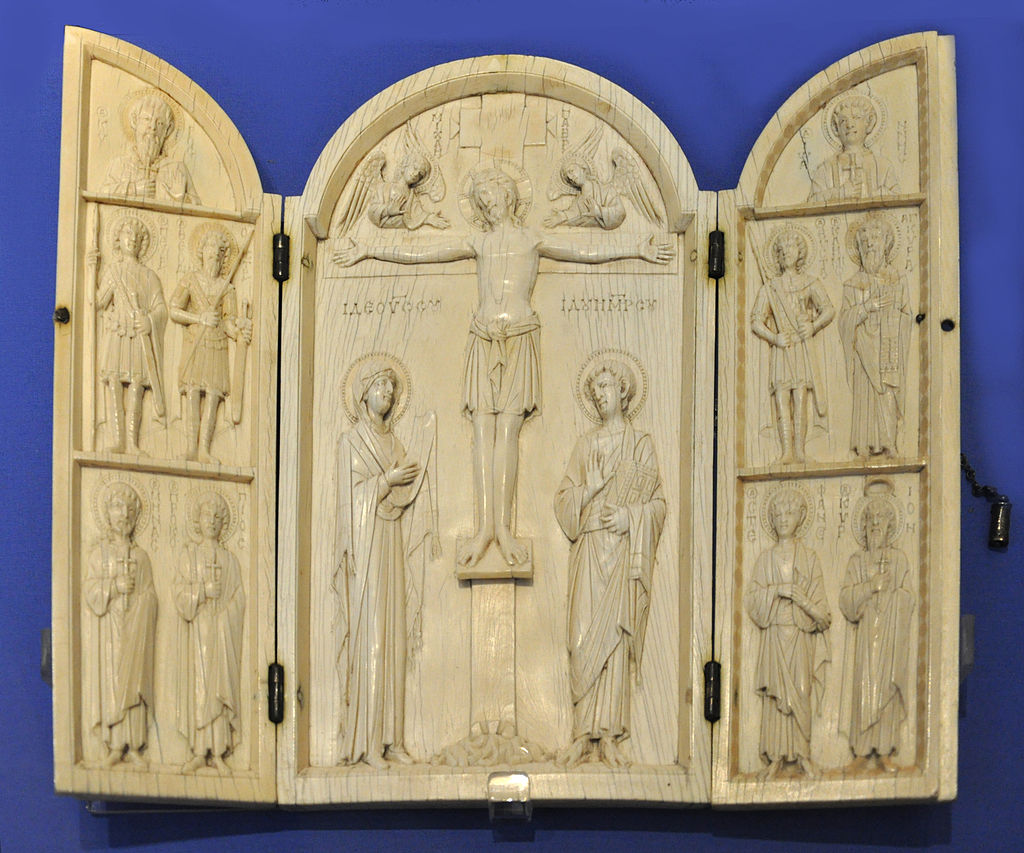
The Borradaile Triptych is one of the outstanding examples of realism during the Byzantine period. Here you can see the Crucifixion of Christ in the Central panel being flanked by the Virgin Mary and St. John the Baptist.
The Macedonian Renaissance is one of the most fascinating periods in Byzantine history. It is really frustrating to me that more people do not study it. It is the Renaissance before the Renaissance in Italy and one of the things that I really love about it is the continuity with the Greco-Roman past. If people were to study the Macedonian Renaissance, they would realize that there is much more that connect the past to the present. There are always going to be echoes throughout history, as nothing is truly transformed in human societies.
 Byzantine-Empire.com