


Justinian is one of my most favorite Emperors of all time. He came onto the world stage when the Byzantine Empire was reaching its Classical height. After the fall of the Western Roman Empire, the East was all that remained of the Imperial legacy. This was the time for the Greek-speaking East to shine brightly in the sunlight. It was during the reign of Justinian that a generation of highly skilled and capable individuals came to the fore and managed to accomplish what was seen as improbable at the time: the restoration of parts of the Western Roman Empire. In spite of this accomplishment, Justinian has been a figure of much criticism, especially from Procopius and his famous Secret History. However, there is a group of people that generally don’t get mentioned when talking about the criticisms and opposition to Justinian. This group of people are the senators who made up the Byzantine Senate.
Generally speaking, we do not have alot of information on individual senators in the Byzantine Empire. This is one of the most frustrating things about writing about Byzantine history, the lack of sources when it comes to dealing with the individuals of Byzantine society. The Byzantines during this period, still considered themselves to be a Republic. According to this coin of Leo II, there is a statement on it that calls him the savior of the Republic. This coin would be representative of how the elites saw the Roman Empire in the years of years of the Theodosian dynasty. The Byzantines during this period were attempting to incorporate the Christian ethos that had developed during the time of the Constantine with the already existing Imperial framework. This meant that the emperor was still considered to be a representative of the people and not some distant ruler. The Roman Emperor at this time was however not the princeps of the classical Roman tradition. He was a new kind of ruler, one that was more autocratic and less beholden to the old niceties of the Roman state. This meant that the emperor was above the senate in a big way.
The Crisis of the Third Century had deeply changed the importance of the Senate. The rise of military men, who became more obsessed with controlling the levers of power than giving the appearances of giving deference to the senate. Emperors like Aurelian and Diocletian were living in a world that was dominated by barbarian invasions and the rise of the aggressive of Sassanid Empire. The old certainties of the ages of Trajan and Hadrian were no longer there. The Empire had to change to this new reality of uncertainty. The Roman Empire would still have these institutions of the Senate as to create the illusion of representation. With the moving of the capital to Constantinople, the Roman senate declined in importance in comparison to the Byzantine Senate.
The Senate in the city of Constantinople was an institution that would have as long and varied history as that of the one in Rome.
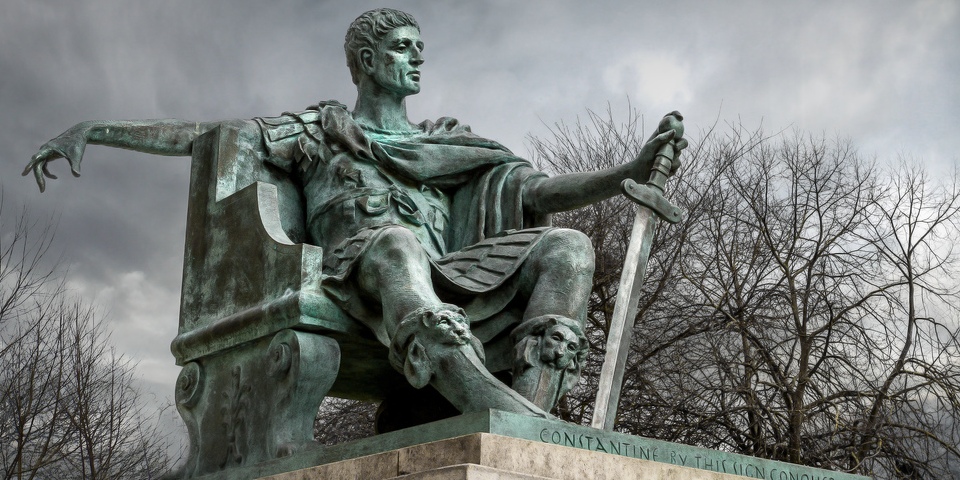
When it began, Constantine sent out offers to wealthy landowners all across the Empire, offering free grain and land to whoever who would be willing to settle in the new, Christian capital of the Empire. Many of these men did not have the stature of the old Roman senatorial families and their lineages. They obviously looked forward to being able to increase their power in a new kind of place where the aristocracy was not in control. Many of these senators were Christian and were not part of the Pagan majority that had been controlling the Roman Empire. They were upwardly mobile individuals who were looking to make their fortune in the new regime.
The Christian senators of the Constantine era were definitely not as powerful as the senators were in the age of Cicero and Julius Caesar. As discussed before, the Christian senators could only hope for to be an advisory body. They were not going to be anything that could conspire to take out an emperor, like the old Roman Republic’s Senate.
Where the Christian Roman Senate had power was in selecting Emperors during the succession. The Eastern Roman Empire or the Byzantine Empire did not have primogeniture, which meant that the oldest son took the throne after the father passed away. Instead, the throne was at the every present danger of being taken by a usurper. The Byzantine Senate played an important role in the transition period between emperors. They also attempted to assert themselves on several occasions, especially during the reign of the usurper Phocas. When the Emperor Heraclius began his reign, he was supported by the Senatorial class and aristocracy that overthrew Phocas. The usurper was in fact arrested by two senators in a church and brought to Heraclius, who had him executed in response to his coup in 603 AD that resulted in the massacre of the Emperor Maurice and his family. This shows that the Senators of the Byzantine Senate were still intimately involved in the politics of the age. This wasn’t just a social club for elite members; they played an important role in politics.
However, no matter how involved they got into politics of the day, the Byzantine Emperor was still at the top of the pecking order of the political system. The days of dressing like the Senators of old were no longer there. It was time for the emperor to dress and act like a Sassanid Shah. The Roman Emperorship had been in a long transition from the days of the Principate. Even Marcus Aurelius, the philosopher king, knew that he had absolute power but decided to respect the Senate. Those were no longer the heady days of respect for the Roman Senate.
Justinian’s reign would represent the apex of the Emperorship in the Ancient Roman sense. His reign would see the culmination of centuries of development in the sense of the word that would lead to an absolute monarchy. The Byzantine Senate, represented the importance of tradition for the Romans, but the old style of politics was no longer important. It was clear that this was the time for the age of autocrats and the not the statemen of the Roman Republic.
 Byzantine-Empire.com