


The Macedonians of the Byzantine Empire were one of the most successful dynasties. The Macedonians managed to bring the empire to greater heights than it hadn’t seen since the days of Heraclius.
Here are the 10 most important achievements of the Macedonian dynasty which ruled Constantinople and it’s the surrounding provinces from the 9th to the 11th century.
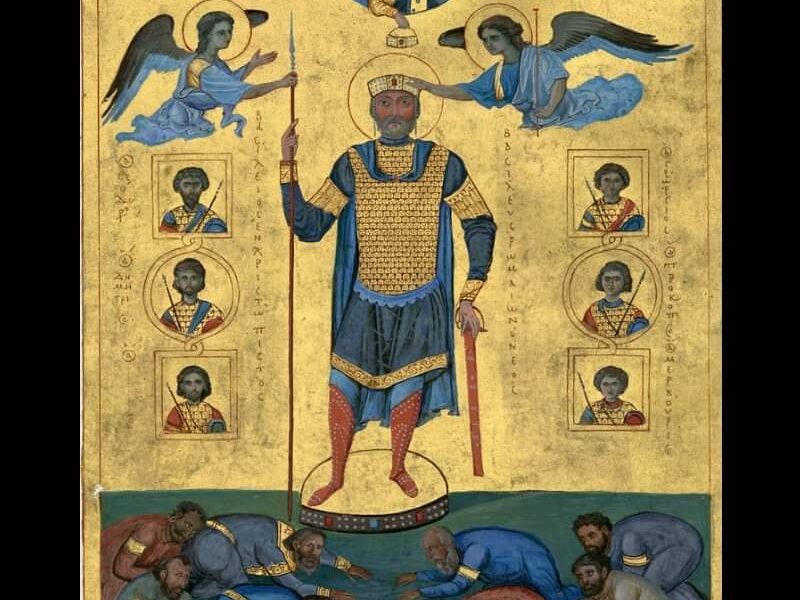
- Providing Stable Succession to the Byzantine throne
While the Byzantines were not able to provide the throne with stable succession through the implementation of primogeniture like in other European states at the time, the Macedonian Dynasty was successful in another area. They managed to have a succession of rulers that managed to govern the empire for more or less 200 years. This is a long period of stability and continuity that was missing in other dynasties after the Justinian Dynasty. The only other dynasty to have this sort of longevity were the Komnenos dynasty. The Macedonian Dynasty’s longevity would cascade many positive things into the welfare of the empire. The long reign of the Macedonians would help the economy, the military and the efficiency of the bureaucracy. Considering all the crisis that preceded this great family’s accession to power, the Macedonian achievements are all the more remarkable.

2. The urban expansion
While the previous dynasties ad something to do with the stabilization of the economy and allowing for urban expansion, the Macedonians were responsible for the maintenance and solidification of the urban expansion. The previous time that there had been urban expansion in the confines of the Roman East was during the time of the Theodosian Emperors to the Mid Justinian period before the outbreak of plague in the 540s. The plague had caused great damage to the urbanization of the late antique world; it did not remove urbanization as a factor in the Roman state. However, it slowed the process of urbanization as people had to recover from the damage caused by the plague. Constantinople saw its population decline from the height of 500,000 to something like 350,000 in the 540s. This sort of damage to the urban population in the Greek East at the time inhibited the Roman state.
The Muslim conquests did not help matters and the Byzantine Empire ended up going into a state of ruralization. By the time that we get to the 9th Century, the previous dynasties were able to get the situation under control and the plagues had stopped wreaking havoc on the population. The Byzantine Empire began having an urban expansion under the Macedonians which continued into the proceeding dynasties that came after them in 1057. Constantinople once again had a large population and was an economic force to be reckoned with. The capital became a trading center as it was stopping point for the Silk Road to China. Money began flowing into the Byzantine Empire with cities growing and new monasteries being constructed across the realm.
3. Turned the Rus into allies of the Byzantine Empire
While the Rus were an issue for the Eastern Romans for many years, the good old Byzantine diplomacy was helpful in at least turning some of them to the side of the emperor. The great Byzantine Emperor Basil II was responsible for being able to bring them into the fold of the Empire. Their contribution to the Empire would clearly be felt with the formation of the Varangian Guard in the Empire.
4. Restoring the Economy
Under the Macedonians, the Byzantine economy flourished like never before since the days of Justinian before the plague. During this renaissance in the Byzantine Empire, the economy saw continued growth in the trading sector as well as the continued strengthening of the Silk industry which had been founded some several centuries before.
5. Affirming the true Orthodox faith.
One of the issues with the reign of Justinian was the lack of religious unity among Christians. This is in part what enable the Muslims to take advantage and go ahead with the conquest of the Near East and Egyptian territories in the Eastern Roman Empire. Emperors such Anastasius were not Orthodox Emperors in their thought. They believed in other Christological arguments, and this led to unrest. While Justinian had tried to maintain the Christian faith in his realm, he was ultimately unable to be able to maintain the stability of the religious order in the land and this led to the weakening of the Byzantine Empire. By the time that we get to the Macedonian Dynasty, they had managed to be able to avoid the issues of religious conflict that had troubled the previous dynasties. The days of Iconoclasm were in the past of the Roman Empire and there was a new concerted effort to get to have religious unity in the Empire. The Macedonians were also responsible in many ways for the rise of an Orthodox identity that would define the social characteristics of Eastern Europe.
6. The Macedonians managed to defeat the Bulgarians
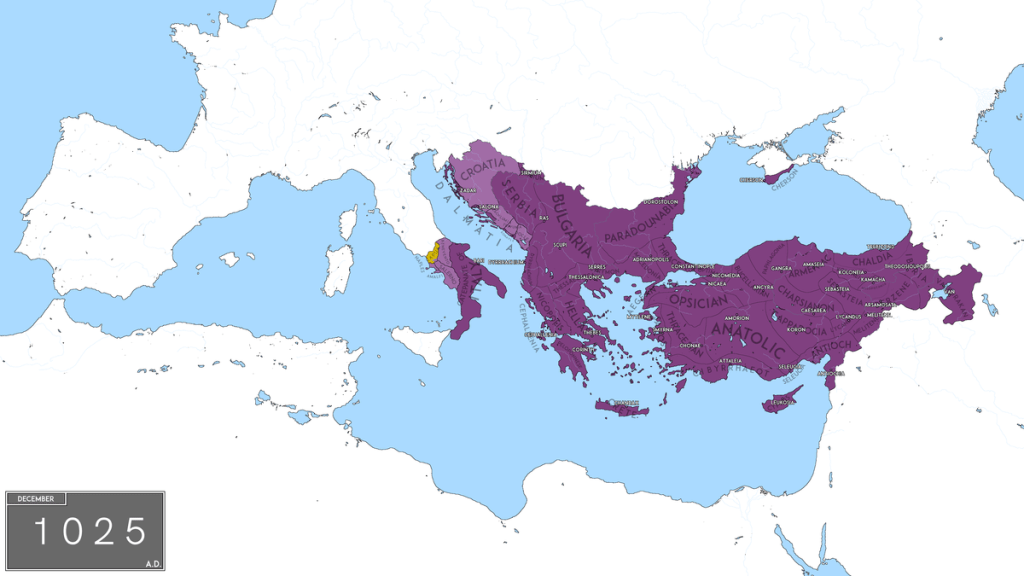
Byzantium’s greatest rival in the West was the Bulgarian Empire. The Bulgars, who had been a thorn in the side of the Byzantines since the famous Khan Krum had bested the Roman Emperor. The Bulgarians would eventually convert to Christianity, becoming a rival power in the struggle for the minds of the peoples of the Balkans. The Bulgarians would continue to give many problems to the Byzantines, besting them on several occasions. For a state that was not as monetized as that of the Byzantine Empire, the Bulgarian State was giving them a run for their money. This is one of the reasons that the Byzantine State as it is represented on the map has sections of Northern Greece under control of the Bulgarians.
However, the situation would change with the rise of the emperor Basil II in 976 AD, which is the date that he truly became Emperor. After fighting a series of Civil Wars with his rivals and usurpers, the emperor set about trying to beat the Bulgarian Empire which at this time was being led by the emperor Samuil. The Bulgarians defeated Basil II at the Battle of Trajan’s Gate in 986. Basil II learned from his experience and began changing his military strategy to subjugate the Empire that had been dogging the Byzantine Empire for so long.
Eventually the Byzantines would be able to crush the Bulgarians, eventually blinding 10,000 soldiers after the Battle of Kleidon. Bulgaria would absorbed into the Byzantine Empire and the borders of the Empire would reach the Danube for the first time since the reign of Heraclius in the 7th Century. This was an incredible achievement of the Macedonians and would prove to be the apogee of the Medieval Roman Empire.
8. Creation of an Orthodox identity and Commonwealth
Among the many achievements that the Macedonians was the ability to get the Rus and many other countries on board with the Orthodox cultural project. In comparison with Catholic Europe, the Orthodox world was become a bastion of the Byzantine Empire and its ideals. To this day, the effects can be seen in how all these countries are Orthodox and share a cultural heritage with each other. This is one of the greatest achievements of the Macedonians, something that is akin to the Muslim conquest of North Africa and the Near East.
9. The Macedonians expand in the Caucasus region.
This area on the edge of Europe had always been fought over by various powers. However, neither the Romans nor their Persian rivals were able to truly beat the other in this area. However, the Macedonian Dynasty was able to be the ones to project power in this region after the Muslim Conquests. In the early 1020s, Emperor Basil II managed to subjugate the Kingdom of Georgia in the region. The expansion of the holdings in the Caucasus region continued in 1054, which annexation of lands around the Lake Van. This was the furthest that the Empire had ever been in the Caucasus region. It was an incredible accomplishment and a testament to the strength of the Macedoinans.
10. Making the Emperor more than a figurehead of the landed nobility.
Under the Macedonians, the empire became more centralized and more powerful, with the emperor reining in the power of the land-owning aristocracy. The aristocracy in the days after the Heraclitan emperors were very powerful and were often the ones that were the power behind the throne. The emperor, while a powerful symbol of the Eastern Roman Empire, was not as powerful as in the days of Justinian and Heraclius.
The land-owning elites had played an important role in maintaining the thematic system that had allowed for the Eastern Roman Empire to survive and eventually thrive in the centuries after the Muslim conquests.
However, the aristocracies had become an impediment to progress and the empire had to change and the Macedonians were able to reform the system and get the Empire running properly again. Basil II would represent the apogee of the system, with the emperor making more of the decisions on his own rather than relying on the aristocrats to help him and his court.
The Macedonian Dynasty were the most successful of the Byzantine Dynasties
The Macedonian Dynasty was among one of the most impressive of the families that ruled the Eastern Roman Empire after the Muslim conquests. They managed to learn the lessons of the past 200 years and managed to revive the fortunes of empire that would lead to a new era of prosperity for the people of the Eastern Roman Empire. In comparison with the eras before and after them, this would be an era that people would look on fondly, a time when the Byzantines were at their apogee and seemed to control the destiny of Europe.
 Byzantine-Empire.com