


As I have stated many times before on this blog, the continuity between Pagan and Christian culture in the Byzantine Empire is one of the primary reasons why I have been so interested in the history of the Byzantine Empire in the first place. Seeing a culture change over time is one of those delights that only comes when one is immersing themselves in the history of the Byzantines.
I was on X.com or Twitter as it used to be called and saw that there was a photo of a Byzantine bureaucrat who served as a governor. It was posted by one of the artists who is charge of the art in the Theophano book as well as the Basil Basilieus series. I was highly attracted to the photograph of this statue as I had seen several photos of statues of Byzantine nobility but had never seen something quite like this before.
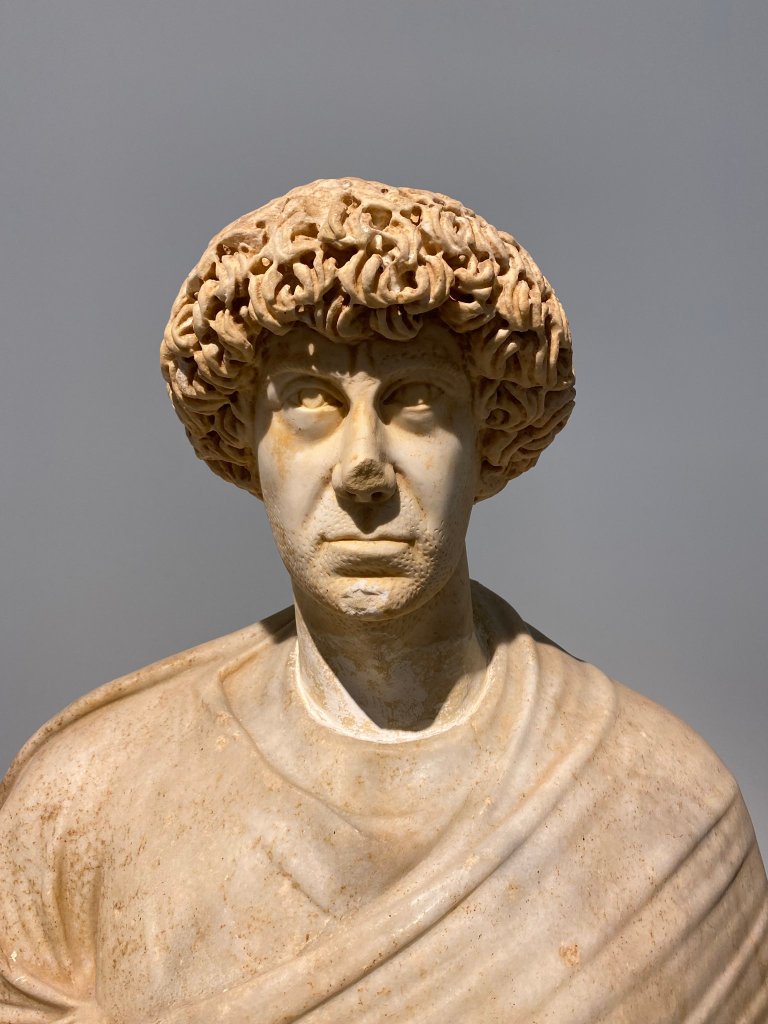
This photograph of this statue shows something that is very important. It shows the continuity of the artistic styles of the Roman Republic and Roman Empire. We have all heard the stories about Christians removing public statuary and causing great harm to the artistic legacy of the Pagan Emperors. However, these statues show that the Christians still honored their artistic heritage and very willing to commission works that were completed in a style that was associated with the old order. The man here was a high-ranking governor named Flavius and most of his story has largely been faded away to the sands of time. However, his statue talks alot about the nature of art during the time of Justinian.
He is an important portal into those times and here is why.
The Emperor Justinian was highly influential and important in the annals of the late Roman Empire. In comparison with other emperors that came before him, there are very few statues of this Emperor who tried to recapture the glory of the past. This is probably because of the Fourth Crusade looting all the art and beauty that was in Constantinople after they betrayed the emperor and began turning their swords on the Romans. This is just my speculation of course, but I truly believe that there were more statues of the emperor.
Consider this, there was once a famous Column that stood in Constantinople. This column honored the emperor Justinian and his achievements. At the top of the column had a statue of the emperor on a horse holding an orb, which is called the globus cruciger, a common Christian symbol. It was a column that adorned the skyline of Constantinople up until the reign of Selim I during the Great Earthquake of 1509.
As the Column of Justinian and others show, artistic continuity continued throughout the Empire even during the time of when the Christians were in control of the government.
The statue of Flavius clearly indicates that the Christians were not iconoclasts who only cared about their worldview being the dominant one. There was a heterogenous cultural environment that allowed for such sculptures to be made. The generations of artists who had made Roman sculptures were still honing their craft in the age of Christianity.
 Byzantine-Empire.com