


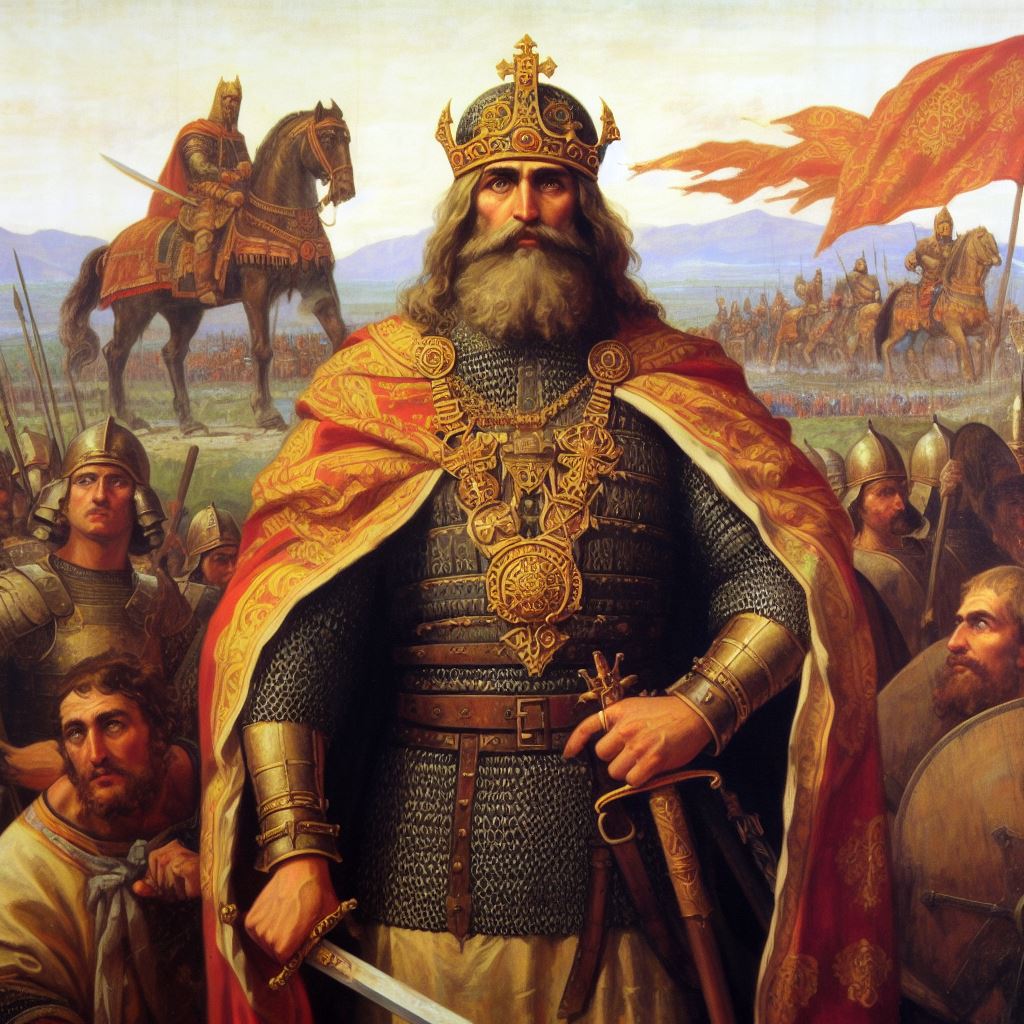
Byzantium’s revival of its overseas empire
The Byzantine conquest of Bulgaria was probably the epitome of the Byzantine Empire’s attempts to claw back to the realm of being a superpower like it had been in the times of Augustus and Trajan. This war was between two major powers in the Balkans. The Bulgarians were a rising star that was becoming more and more powerful and even being able to challenge the Byzantines on more than one occasion. The Byzantine state, while not teetering on the brink as it was during the Sassanid War of the 7th Century, was still being threatened by this powerful medieval state. Even though it was less advanced and did not have a monetary economy, the Bulgarians were a proud people who were willing to challenge the empire and besiege the capital of Constantinople. While the Byzantines were not a representative system like the United States, they were driven by a different sort of ethics than that of their Pagan Roman ancestors. The need for war and conquest was not as important to the Byzantines. While there was need for generals of aspiring noble families to get their hands dirty as usual, there wasn’t the same stamp of approval for conquest as there had been with the beginning of Augustus’ new regime. However, in the case of Bulgaria, the Byzantines would awaken their long dormant lust for conquest by engaging the forces of Emperor Samil and his heirs.
The Byzantine Empire at the time of the rise of the Macedonian Dynasty was still reeling from centuries having been on the defensive. The crisis of Iconoclasm had taken a toll on the people and the empire. However, a sense of Orthodoxy had returned to Empire, meaning that there would finally be stability and the ability for the empire to focus on its enemies.
The Arabs in the East and South were worthy adversaries to the Byzantines but it was really the Bulgarians who really the greatest threat to the Byzantine Empire. The Bulgarian Empire was a more recent power that came to prominence after the Pagan Bulgarians converted to Christianity. The Bulgars already had bested the Byzantines under the leadership of Khan Krum and they well on their way to becoming a powerful empire.
The Bulgarians would fight the Byzantines many times before their conquest by Basil II in 1014.
Even though the Byzantines were a powerful empire, they weren’t the Romans of old. They did not have the resources to punish their enemies in the way that Germancius could have punished the Germanic tribes that ambushed in the Romans in the later days of Augustus. The Bulgarians on multiple occasions would best the Eastern Romans in battle. They were literally the equivalent of the Sassanids in the late 10th and early 11th centuries.
The Byzantines needed to conquer Bulgaria for one simple reason; they were a threat to Byzantine dominance in the Balkans. They were a persistent rival that were block to the Byzantine’s influence on Western Europe. With the conquest of Bulgaria, the Byzantines would be able to restore their past to glory and move the border to the Danube and be able to bring about the renewal of the Roman Empire.
The Bulgarian Empire’s challenge to the Romans
The Bulgarians posed significant challenges for the Byzantines during the 10th century, emerging as a formidable adversary to the Byzantine Empire. Despite being a relatively young power, the Bulgarians had already demonstrated their military prowess and posed a significant threat to the Byzantine state. The rise of the Bulgarian Empire and their conversion to Christianity under Khan Krum marked the beginning of a new era of conflict between the two powers.
One of the key factors that made the Bulgarians a formidable foe was their increasing power and influence in the region. They quickly became a rising star in the Balkans and were steadily expanding their territories, encroaching upon Byzantine land. Their military capabilities and strategic positioning allowed them to challenge the Byzantines on multiple occasions, proving their mettle on the battlefield.
While the Byzantines were no longer driven by the same imperial conquest ambitions as their pagan predecessors, they recognized the threat posed by the Bulgarians and the need to protect their sphere of influence. Basil II, in particular, had strong incentives to conquer this arch rival of the Roman Empire. His desire to secure his own reign, expand Byzantine territories, and demonstrate the strength of his rule led him to wage the decisive war against the Bulgarians in 1014.
Despite their immense military challenges, the Byzantines were resource-constrained compared to the Roman Empire of old. They lacked the same vast resources and capabilities that allowed the Romans to punish their enemies with impunity. The Bulgarians, taking advantage of this weakness, were able to outmaneuver the Byzantines in battle, often proving to be their equal and even comparable to the formidable Sassanids of late antiquity.
In conclusion, the Bulgarians in the 10th century greatly troubled the Byzantines, becoming a major obstacle for the Byzantine Empire to overcome. Through their military strength, growing power, and unwavering determination, the Bulgarians challenged the Byzantines repeatedly and demonstrated their ability to assert themselves as a significant player in the region.
However, the Byzantines were eventually able to beat the Bulgarians. Samil, the Emperor of the Bulgarians, was a formidable leader but he was leading an Empire that simply did not have the resources to keep fighting the Byzantines.
The Bulgarians’ defeat at the hands of the Byzantines was primarily due to several factors that favored the Byzantine Empire. Despite the Bulgarians’ military prowess and previous successes against the Byzantines, they faced significant challenges in their conflict with the Byzantine Empire. Here are some key factors that contributed to their defeat:
- Leadership and Strategy: The Byzantine Empire, under the leadership of Basil II, had a capable and skilled military command. Basil II, known as “Basil the Bulgar-Slayer,” was determined to defeat the Bulgarians and secure his rule. He implemented strategic military tactics and reforms, effectively utilizing his forces against the Bulgarians.
- Byzantine Resilience: The Byzantine Empire had decades of experience in dealing with external threats. Despite previous setbacks, the Byzantines had a strong and resilient state apparatus, which allowed them to recover and adapt to challenges. This resilience enabled them to weather the storm and mount counteroffensives against the Bulgarians.
- Resources and Logistics: The Byzantines had a more developed economy and access to greater resources compared to the Bulgarians. This allowed them to maintain a strong military, replenish their troops, and sustain their war effort over an extended period. The Bulgarians, on the other hand, lacked the same level of resources and faced logistical challenges that ultimately weakened their ability to sustain a prolonged conflict.
- Superior Byzantine Forces: The Byzantines were able to assemble a formidable army, consisting of well-trained and disciplined soldiers, supported by effective military infrastructure. Additionally, the Byzantines had access to superior weaponry, including advanced siege engines, which gave them a significant advantage in capturing and defending fortifications.
- Political Instability: The Bulgarians experienced internal conflicts and political instability, which weakened their ability to effectively confront the Byzantines. This internal division and infighting undermined their unity and hindered their military efforts.
- Decisive Battles: The Byzantines won several crucial battles against the Bulgarians, most notably the Battle of Kleidion in 1014. In this battle, Basil II employed a strategic maneuver that trapped and defeated a significant Bulgarian army, leading to the surrender of their leader Samuil. This defeat severely weakened the Bulgarian resistance and paved the way for Byzantine dominance over the region.
The Bulgarians’ defeat to the Byzantines can be attributed to a combination of superior leadership, resources, military capabilities, and strategic advantages held by the Byzantine Empire. These factors, coupled with internal conflicts and decisive battles, ultimately led to the downfall of the Bulgarian Empire and their subjugation under Byzantine rule.
The Byzantine’s victory was one of the most important triumphs of the Middle Ages. It helped the Byzantines reach the apex of development as a civilization. However, one of the most important results of this conquest was that the Byzantines were able to knock out one of their important rivals in the Balkans and establish themselves as hegemons for many years to come in the area.
 Byzantine-Empire.com