


The Russian Empire was often seen as the successor to the Byzantine Empire. In the years before the Tsardom took power in Russia, the Slavs were part of the Byzantine Commonwealth, which is a historical abstraction that refers to the shared identity of Orthodox countries. The Byzantine Empire, ever since the schism of 1054 with the Catholic Church, had been the headquarters for Orthodox Christianity and it spread its theology across the Balkans and Eastern Europe. However, no-where was this identity as strong as in Russia, which called itself a Third Rome, succeeding the Pagan Rome and Christian Constantinople.
The Russian state has been a truly unique state in the history of nations across the globe when it comes to exports is its cinema.
In comparison with American cinema today, Russian movies and television shows are generally speaking, in my opinion, are more interesting and seem to less be interested in being political arms of a political party and trying to actually tell stories. American cinema, which was incredibly successful in the beginning of the 20th Century has become lethargic and becoming infiltrated by all sorts of oligarchs who just want to make a quick buck on their movies.
Even Soviet cinema, especially after the early Revolutionary era, seems to have this philosophical and intriguing approach to talking about human nature. I expect nothing less from a country that has produced so many great writers. Russian cinema has been undergoing many changes since the Soviet Union transformed into the current Russian state and some Russians are complaining that the quality isn’t the same. However, Russian cinema, even with the excesses of the 1990s, is more experimental and most importantly respectful of history than America.
As Russia is dealing with how to understand its turbulent past, there seems to be change in how the nobility are being understood by the Russian artistic community.
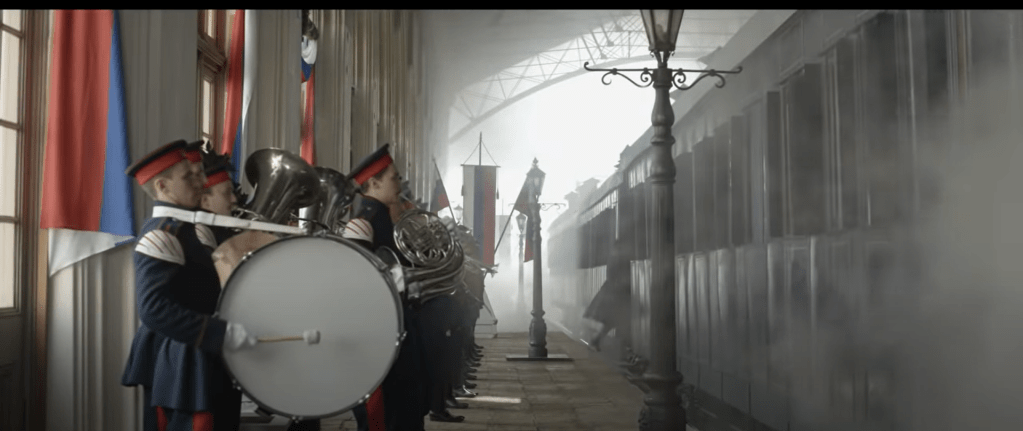
Previously, Soviet Cinema tended to look at everything through a Marxist lens. Which meant that the nobility tended to been seen as parasites who were holding back Russian culture and society.
However, after the transformation of the Soviet Union into the more capitalist state that it is now, the cinema seems to be closer to how America tends to portray rich people. While people may complain about the wealthy and how they have too much power in societies across the globe, people seem to be also enamored with the power and agency that comes with being wealthy.
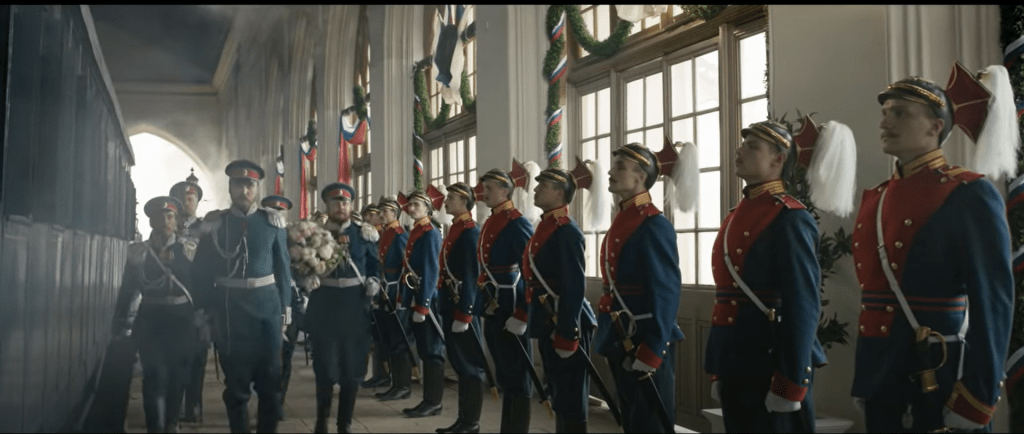
The Romanovs, who were once seen as part of a parasitic class of people, are now being reevaluated by filmmakers in Russia. While in the West, the Romanovs have this allure that is hard to surpass. While some films and tv shows tend to criticize the Romanovs, the myth behind this ruling house remains strong, as people seem to have this attraction to royalty across the globe. In Russia, they are taking a different approach that seems to go between seeing them as these martyrs to decadent individuals who did not nothing to enhance the country.
The movie Mathilde or МАТИЛЬДА as it known in Russian is a movie about love in its simplest structure, but it is also a movie that says something about how Russia sees its past and communicates its past to the modern audience.
This conversation with the past is always an evolving conversation.
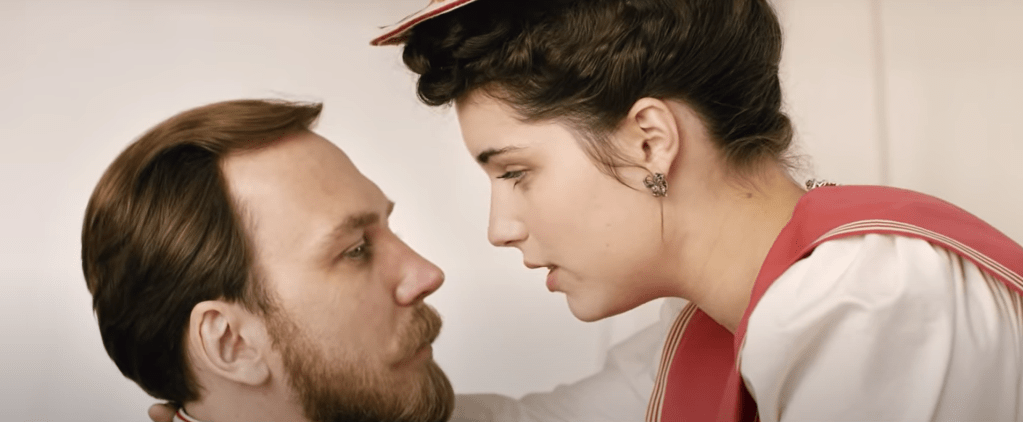
The Russian movie Mathilde is an interesting one in that it is about ballerinas in Russia. In this particular narrative, it’s about one of the most popular ballerinas of the late 19th and early 20th Century Russia, Mathilde Kschessinka and her relationship with Nicholas II before he became czar and also before his coronation.
The movie was highly controversial in Russia upon its release in 2017. The observant Orthodox population in Russia, which had to go through years of repression under the Soviet Union was becoming more vocal about its concerns and issues with regards to the direction of Russia. There were many in this faction who were angry about the depiction of Nicholas II and his wife. The main concern among these Orthodox activists was that the mistress, Mathilde, was making the Royal family look like a bunch of incompetent rulers.
Mathilde Kschessinka was a woman who represents the strange quality of the 19th Century Russian woman, who has one foot in the west and the other in the East.
Matilde was of Polish Nobility and could have been in position to become empress herself, had she really put herself onto that path. However, it was not to be.
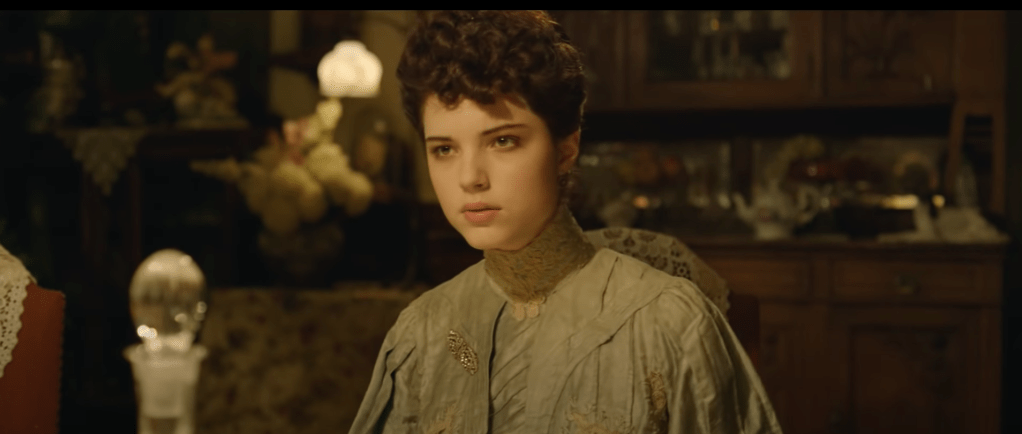
Mathilde in all her photos that were taken in the 19th Century seemed to have been a very attractive woman and I can understand why Nicholas was attracted to her. There is also the added bonus that she was a ballerina with incredible skills and the ability to wow an audience. The nobility had a true appreciation for such arts such as ballet.
Russian ballet has generally speaking been seen as the best in the world. Their dancers have generations of hard-working women who have brough the many ballet schools in Russia to a high degree of excellence that is hard to see in America. It is an institution that Russians can be rightfully proud of, especially that they have exported so many ballet performers to the world to share their art with others. That is one of Russia’s greatest achievements in arts.
Within the cinematic view of such an artform, Mathilde 2017 seems to regard ballet and Mathilde herself as little more than expensive courtesans. They are a step above prostitutes but the way how the movie portrays them, they are more like actors in Classical Hollywood who have to sleep around to get parts.
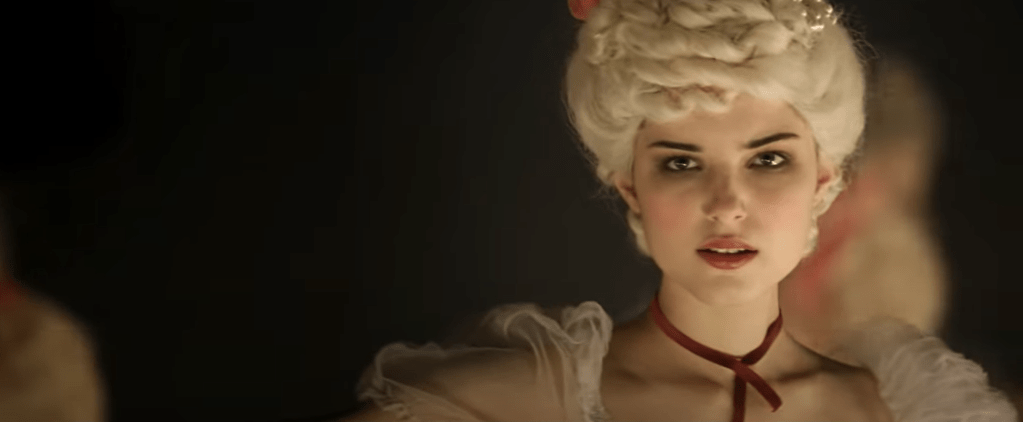
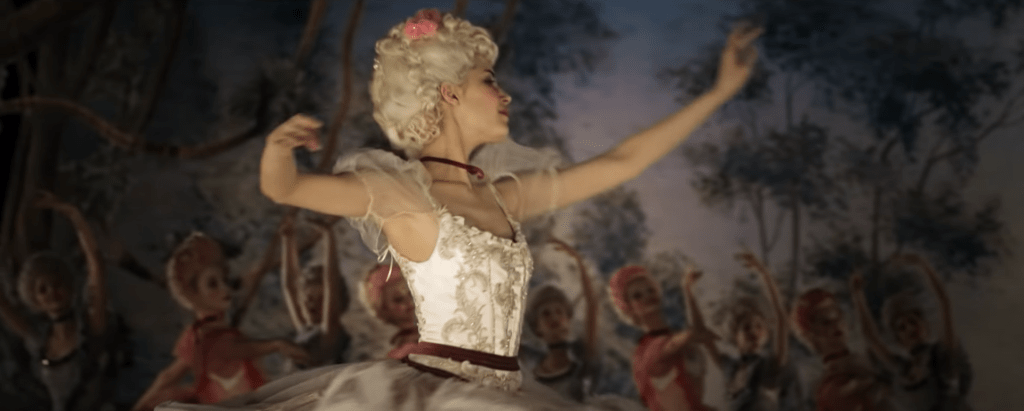
Matilde in the opening ballet scene that triggers Nicholas II’s obsession with her seems to be done by the director in order to prove that Mathilde had deliberate motive to manipulate him.
The actress who plays Matilde Kschessinka is Michalina Olshanskaya, a Polish woman from the capital city of Warsaw. She is a very beautiful actress, and she manages to capture Mathilde’s likeness quite well even if it is not an exact copy. The actress in that opening meeting between the heir to the Russian throne and ballerina uses her eyes as a way to capture the attention of the characters. In one part of this scene, the movement in the movie is slowed and you can see her eyes at the edges looking at Nicholas II, as she is entrancing him. It is a deliberate move on her part. She isn’t looking at the audience in a general sense but at the heir.
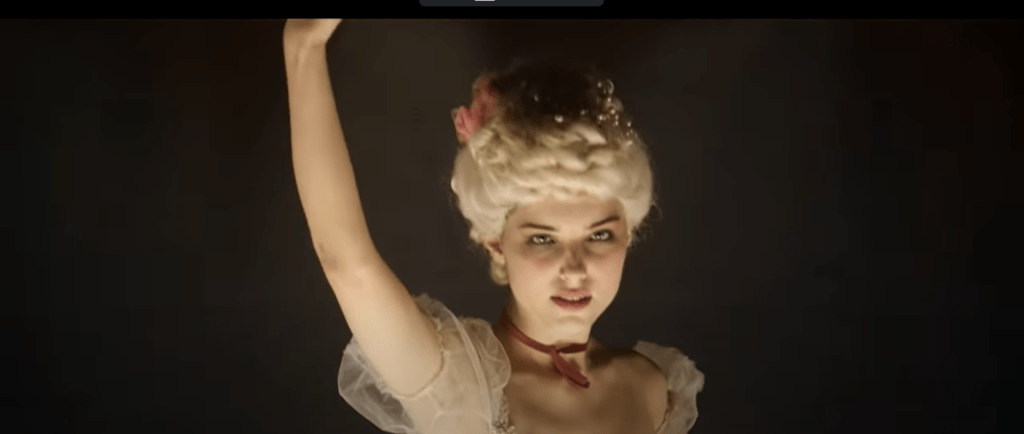
In another scene later in the movie, Mathilde seems to be indicating that she had been with many men since her early career in ballet at age 16. Either she is lying, or she is exaggerating in this scene. However, whatever the director was trying to achieve with this scene, it seems that he wanted to say that the ballet dancer was more experienced about sexuality than the most powerful man in Russia after the Emperor. It seems to me that the depiction of Mathilde as a divine harlot who seeks to tempt the immature Nicholas II is a more of a product of our modern sensibilities than how it actually occurred in that time.
However, this isn’t to say that there wasn’t a great love story here but the director seems to be tapping into this sensibility about sexuality that seems to be so present in the modern day.
The director seems to want to have it both ways, trying to have this really ancient courtly love romance and then try to make it vulgar by having Mathilde expose her body on stage to gain attention. This isn’t to say that people didn’t have feelings that engaged by the showing of such skin, but it seems highly unlikely that Mathilde would have been able to show it that blatantly in a highly Orthodox country.
The issue of ballerinas being seen as available young women who just so happen have great skills at dancing has been a theme in the fantasies of artists in Western Europe for many years. Many French artists sought to depict ballerinas as these vulnerable beauties whose lives brought so much beauty as well as tragedy to people’s lives.
Mathilde is depicted in two ways by the director that corresponds to this traditional view on ballerinas. One, she is this incredibly beautiful woman who is innocent yet on the other hand she is very promiscuous temptress who is leading Nicholas II astray. The director of the movie seems to be not so interested in the historical facts and is interested in creating a costume movie rather than a historical epic.
To the modern man, it seems really hard to even conceive of a ballerina as a anything other than a prostitute in some ways. To the outside world, the Russian woman has always been something an enigma. This movie does not really seem to rest that question. Mathilde in the movie a symbol of a corrupt purity. Unlike the heir, she actually seems to know what she wants and that is what this movie is really about.
 Byzantine-Empire.com