


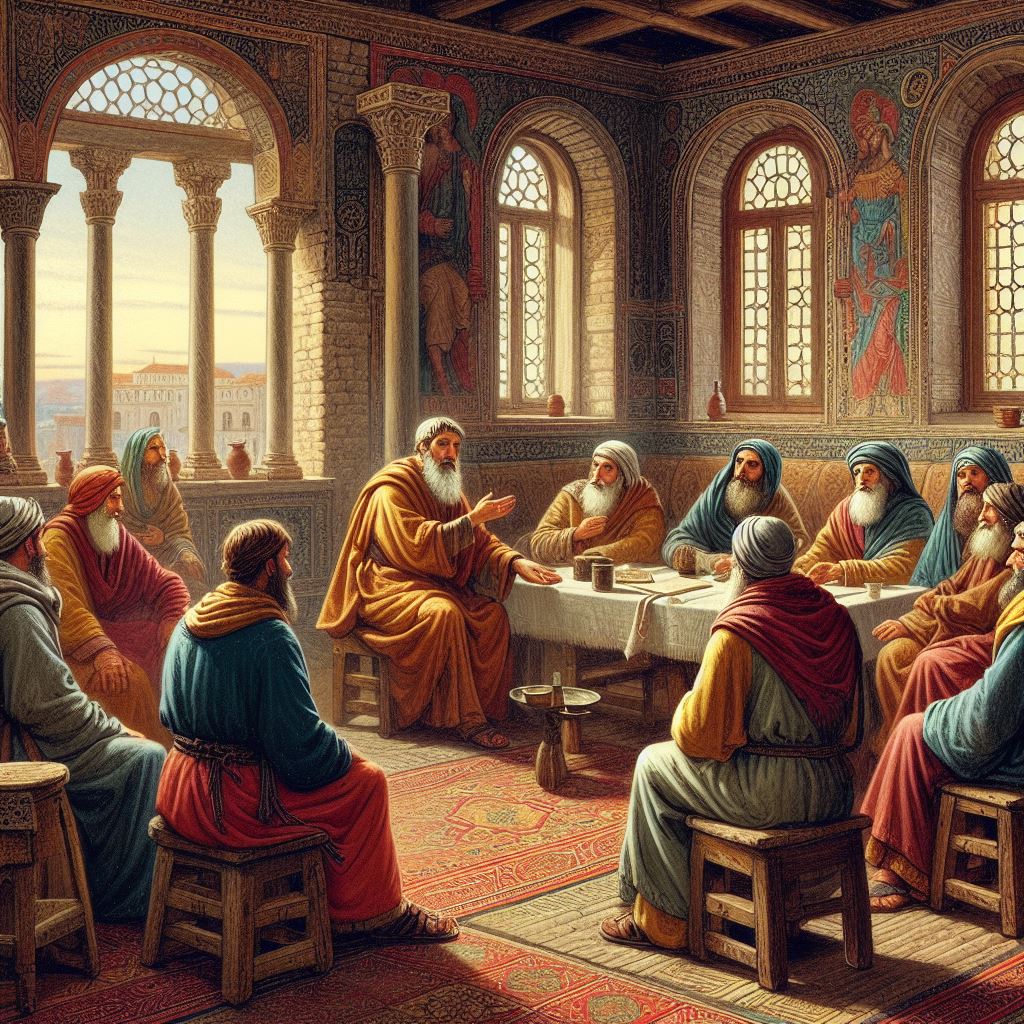
The Byzantine era was incredibly interesting and important in shaping world events past the Roman pagan era. However, as I have stated many times on this blog, it seems that people are content to not put any effort towards knowing anything about this important age that shaped the spiritual life of many people across the globe. I have been amazed at how incredibly motivated people in the historical Byzantine space are. Authors such as Anthony Kaldellis are important, unsung heroes who are cutting through the noise to give us a better representation of this era of history.
However, it is not enough for academics to try to bring light to this era of history. We must as ordinary citizens be willing to impart this knowledge to others. This is the point of what scholars call public history. History is not just meant to be something that scholars are interested in. It is something that should impart knowledge to all kinds of people. American education has been getting worse and people are not as aware of the history of their own country and are instead obsessing the cultures of foreign lands, even if it is cursory. While some may say that concentrating on Byzantine history is the same thing, I believe that America’s Christian culture is something that is should be understood in the context of Roman history. The words in the Bible were made in a Roman context and Americans should try to understand where how their religion managed to alter the lives of so many people around the globe.
However, when it comes to educating people about nature of Christianity in the Roman Empire, education in Christian contexts are generally speaking pretty shallow when it comes talking about Roman history. They generally talk about the living conditions of Judea and particularly about the Galiee. However, this often ignores the rest of the story about the rise of Christianity in the Roman Empire. In order to get more of this in-between history of Christianity in the Roman Empire, you have either be in a seminary school or be active in your education. Most Christians in America tend to skip right to Emperor Constantine and the Council of Nicaea and then the narrative shifts towards Christian triumphalism with a sprinkling of Emperor Julian’s rebellion.
Christian Triumphalism made more sense in the 5th Century than in the present day. I think it behooves Christians today to actually read about their history.
The story of Ancient Rome is an important story but it is not the only story that needs to be told to audiences.
I think that expanding the reach of history beyond the Pagan Rome is an imperative. We need to start to getting people know about the importance of figures such as Emperor Justinian, Leo III and Basil II. I think that when we try to talk about these figures, then people will be less willing to look at Roman history as more just the pagan era. That is why people have to understand that Roman history is way more complex than just Julius Caesar.
Christians today, especially in America need to understand the struggles that got us to Nicene Christianity. Too many people take it for what it is and are not interested in actually trying to understand how Christianity took over the Roman Empire. Christianity in this country could be reinvigorated if people were just willing to take up the study of Christian history.
 Byzantine-Empire.com