


When one considers how American political culture has evolved over time, there are two spheres of how it perceived by the population. The elites, who like portray themselves as helping ordinary individuals, are really more about self-interest. They wish to create an oligarchy within the sheen of representative government while extolling it as inheritor to Athenian Democracy that was started under Solon.
The other sphere is that of everyday citizens, generally those who think America’s government system is essentially Solon’s government in a modern state. There are also many other sub factions and people who are renegades and do not agree with these simplistic formulations of our government. However, these are the two main ways to think about America’s political systems and how citizens relate to them.
In the elite discourse, which is generally quiet incompetent at maintaining the Post-War illusion of American control over the globe has become more insular and myopic at how it thinks about other political systems. What this means is that our elite are spending their time talking about autocracy as if it is the 1900s when Nicholas II and Sultan Abdul Hamid were in power. Those were true autocracies in the sense. However, in that very time, these powers, including the Qajar Shahs, were facing revolution that made into semi-constitutional monarchies. Nicholas II’s and his family’s inability to escape the clutches of the Communist Revolution has become a myth onto itself in many ways. However, our elite are obsessed with calling every government they dislike an autocracy.
Autocracy is simply the rule of one man. Throughout history, there has never been a true autocracy, when one considers the limitations of human minds, no matter one’s intelligence. There has always been a bureaucracy that supplemented an autocracy. America’s elite have no ideas, so pull out tropes that are well-worn and eaten by moths.
This is of course not surprising, our elite are not interested in history and think they are somehow living in some liminal space where history does not matter to them.
It is quite possible that the Romans, especially the elites may have believed such thoughts as well. In the beginning of Augustus’ reign, the Roman Empire had been so victorious in so many battles with various empires, that it seemed that their main deity, Jupiter had given them the right rule over the entire globe or have influence over it. In comparison with America having not many adversaries after the colonial era, the Romans had been able to build an empire out of a city that was once nothing more than a village that had Etruscan overlords who were ruling them.
The Byzantine Empire has for some time been seen as an empire that stole its heritage or was a corruption of such heritage. One issue that I was talking about in my previous was that Western Europeans were essentially was dismissing Byzantine history as it was tied up with the Orthodox church and that in some of the more revolutionary sections of Western European in the Protestant Reformation needed something to attack in order to pursue their war with the Catholic Church.
Another issue that arises when one is talking about the Byzantine Empire is that the elite continue to have this idea that the Byzantine Empire was an autocracy. Of course, as I have stated before, there has been no true autocracy. This is simply our elite trying to use tropes that do not make sense in our current age.
Our elite are stagnant in their thinking and this includes history as well, especially on the issue of the Byzantine Empire.
The Byzantine Empire or Eastern Roman Empire was an extension of the growing authoritarianism in the Roman Empire. The Principate which was a product of an age of extraordinary politicians such as Cato the Younger and Cicero who were propelling the spirit of the Principate to new heights in spite of the incessant scheming and civil wars that would occasionally pop up in the Empire.
The Empire however was an autocracy in the simplistic way that the Western elites and American elites tend to believe in. Their system is stagnant and no longer has true energy behind their actions.
The Byzantine Empire was an authoritarian monarchy that was supported by a huge bureaucracy that would have astonished the Early pagan emperors, such as Augustus. His empire, in comparison to that of the peer empire of the Han Empire, was not as authoritarian or bureaucratic.
The Byzantine Empire’s emperors were absolute rulers in theory, however, there was great amount of respect in the early days of the Empire for revering the Byzantine Senate as well as the many offices that were ancestral parts of the Roman Republic.
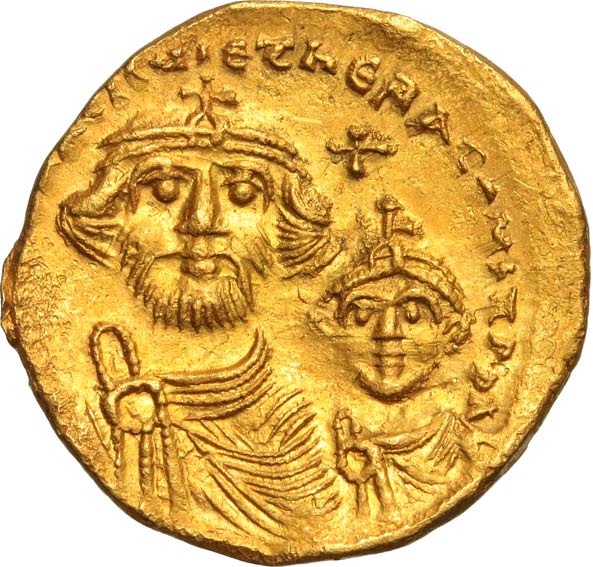
The Roman Emperor, Leo II had a coin that was minted in the years of reign with the script saying that he was the restorer of the republic. Even though the Eastern Roman Empire at that time was a government where the power of the empire was revolving around the Emperor, there was still much respect for the traditions of the Roman Republic. Even the tradition of the Consul was maintained in the Roman Empire at this time.
The Byzantines were not simply just an autocracy. It was a sophisticated and bureaucratic state that had many checks and balances in the system.
While Cicero would have probably though such a system was nothing more than a cleverly hidden monarchy, the Byzantine Empire no autocracy.
Before the modern age which begins in the 18th Century, the only state that came close to the autocracy that these ignorant elites scaremonger about is the Chinese empire under the Qin. The Chinese imperial state would never truly shy away from how totalitarian this state was. While the Early Han Empire would attempt to move away from such centralization but under Emperor Wu, the Chinese Empire would continue through the various clans to become more powerful before truly peaking again under the Qing Emperors.
The Byzantine Empire was not really a republic, but it was not quite an autocracy. The state was a highly bureaucratic empire but there many aspects of the empire that were able to stand in opposition to the emperor and check the power he had over his nobles, military and citizens.
 Byzantine-Empire.com