


Topic: Economic History in Medieval Europe.
Outline:
- The Byzantine Empire was one of the most powerful economies in the Middle Ages
- The Byzantine Empire had an economy built on trade and agriculture
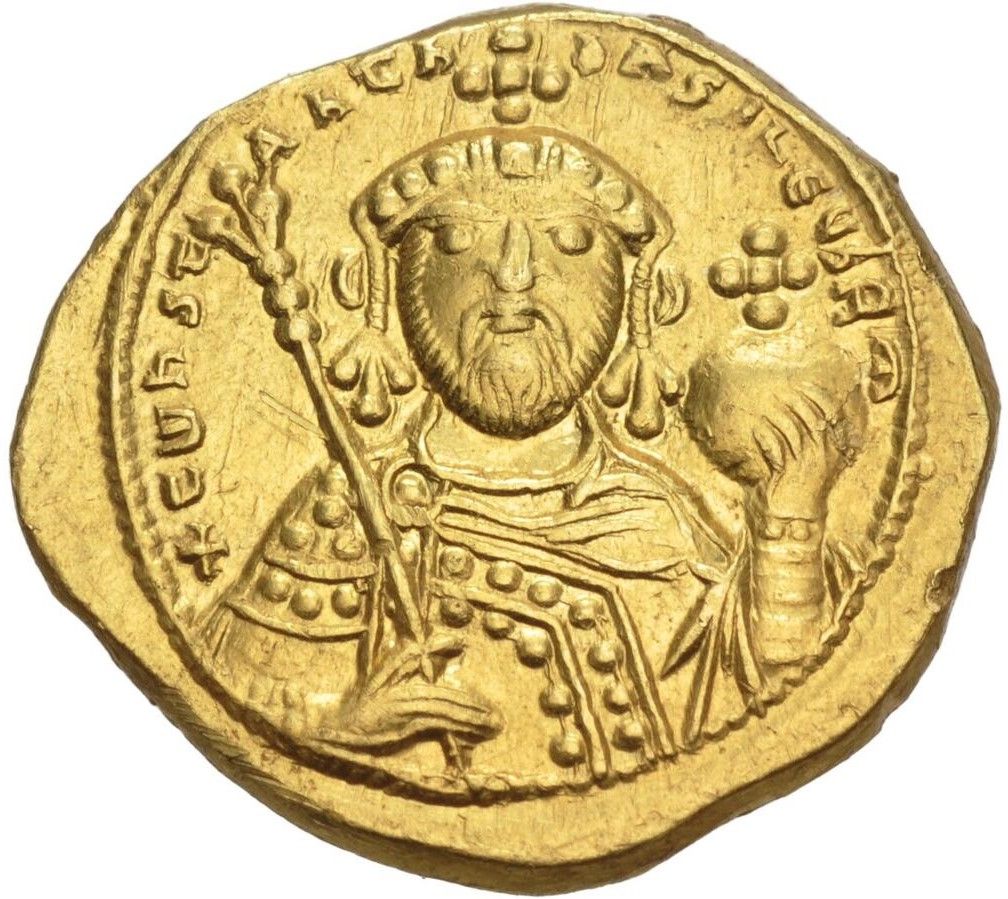
- The empire had a stable currency that was minted in various metals and denominations.
- The Solidus was a gold coin that saw wide usage in the Latin Europe and Northern Europe during the Middle Ages.
- The Byzantines managed to jumpstart innovation through industrial espionage. They stole the ability to make silk from China and brough to the empire under Emperor Justinian.
- Byzantine Silk was regulated as an Imperial monopoly and only sold to the elite and in specific stalls according to government regulations.
- The Byzantine Economy went through phases of growth, decline and rebirth throughout its history.
- The Byzantine Empire had three eras of economic strength: the 6th Century, 9th and 10th Centuries and 12th Centuries.
- The Fourth Crusade greatly hurt Byzantium’s preeminent position as the powerhouse of the Medieval European Economy.
- The Byzantine Economy fell victim to the Italian city states, such as Venice which were allowed to trade with the empire duty free and create quarters for merchants and their families in the of Constantinople.
- The Byzantine Economy after the Fourth Crusade increasingly became dependent on the Italian City states.
- After the sacking of the Constantinople, the Byzantine Empire’s economy was a shadow of its former self and the coinage increasingly became dominated by foreign currency, especially by the Italian city states.
 Byzantine-Empire.com