


The Greek Revolution and the Texas Revolution share many similarities. The most important similarity is that the revolutionaries were both fighting against the more urban and imperial powers of the Ottoman Empire and Centralist Mexican Republic, respectively. However, how the conclusions of both revolutions resulted in the creation of nations that had very different trajectories. Texas remained a Texan creation even after annexation to America. Greece would enter a struggle to reclaim its true independence as something more than the repository of the dreams of the Philhellenes.
The Birth of Modern Greece: The Neoclassical colonization of Greece
The Greek people managed to free Greece from Ottoman rule, at least on the Peloponnese and some of Central Greece. However, it was clear that battle for Greek identity was now beginning in a struggle with Western and Central Europeans.
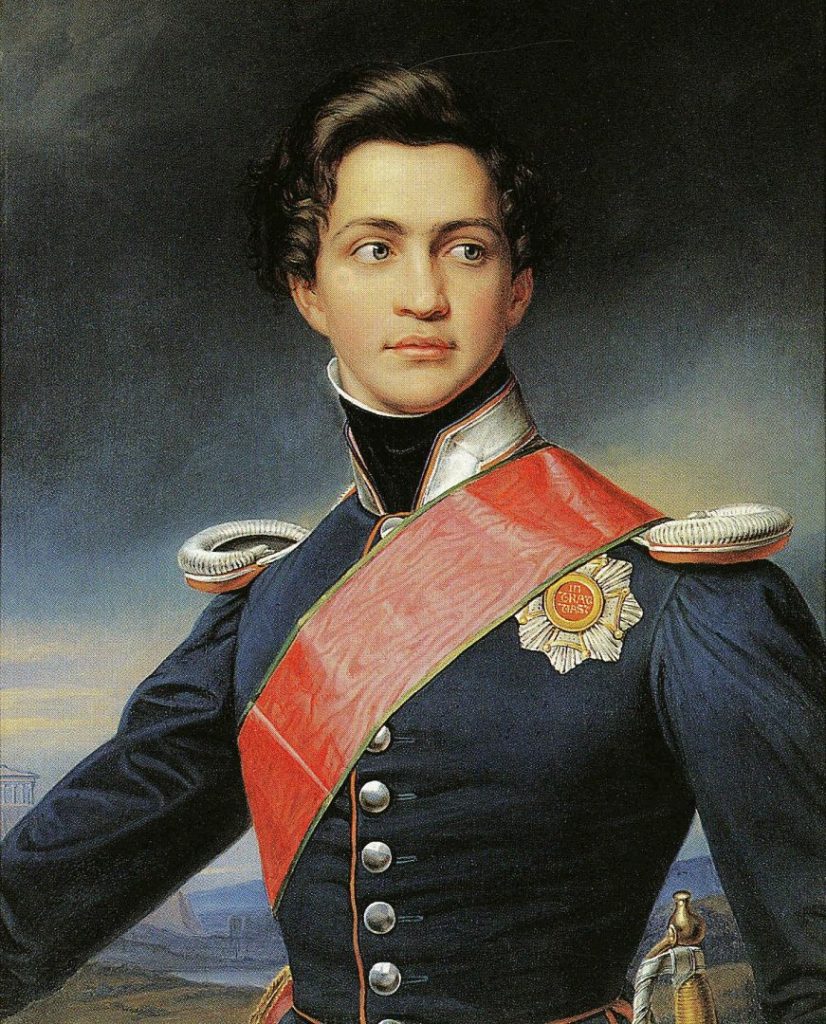
King Otto was young but a man who represented the interests of highly intellectual and idealistic Philhellenes. The Byzantine Empire, with its Orthodox Christian culture was not seen as a continuation of Greco-Roman culture. There was much disdain with clericalism in this age and many Philhellenes believed in reviving Ancient Greece. They were not interested in remaking the Byzantine Empire as Imperial Russia had contemplated in the reign of Empress Catherine. However, this was mainly in the interests of the Upper Class as well as the merchants who had a real divide with the common citizens of Kingdom of Greece.
The commoners, or the village people of Greece, who had spent centuries under the yoke of the Turks, were not interested in remaking Ancient Greece. What was more important to the people of Greece, especially in the sections under control of the Ottonians was economic development over remaking the society of Pericles.
While many Philhellenes were important in bringing Ancient Greek culture back to the foreground of the imagination of Europe, they forgot about the practicalities of governance.
Under the Ottomans, the Greeks kept their religion, but they were unable to get out of the shadow of the Sultan. The empire was creating a brain drain on Greece, with many of its greatest minds having their efforts put into the Imperial administration of the Sublime Porte.
The victory of the Greeks over the Ottomans with Western support gave the civilization another chance on life. However, there was much work to be done, and the countryside was in bad shape. Most of Greece had been stripped of is great wealth by the Ottomans and the people were hardy but hungry for change.
Under King Otto, many of the important institutions of Modern Greece were built in Athens. The world-famous Archaeological Museum began its planning under his reign. The Athens University would also start its construction under his reign.
Athens at this time was a shadow of former glory which had been growing over the centuries. The city was largely ignored by the Sultans. Thessalonica was the jewel of Ottoman Greece. Now, it was time for Athens to return from the depths of history and send its blessings across Greece.
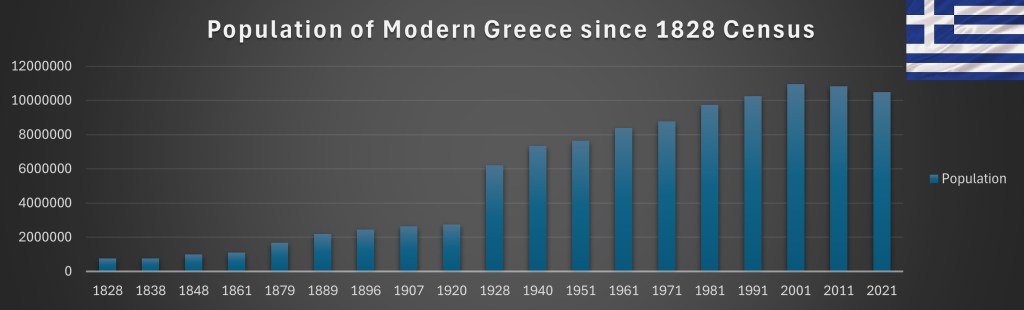
The image above shows the population of Greece from the first census in 1828 after independence to the most recent one in 2021. One can see that King Otto was dealing with a country that hardly had any urban areas except for Nafplio, which was the first capital of the Hellenic Republic before Athens would regain its place as the beating heart of Greece.
Modern Greece in a sense did not really begin until the country had brought back its entire ethnic population. The Redeemed Greeks of the Northern part of what we now call Greece were still under Ottoman rule during Ottonian rule.
King Otto’s Reign: An Intellectual Project for the Philhellenes.
The King had to contend with pushback from Greeks such as the 1843 Revolution and his exile after the 1862 Revolution. His reign began in a time of great optimism about the nature of the Greek project. In the currents of the 18th Century views about reason and rediscovering the culture of Greco-Romans, Greece was prefect petri dish in order to create this new state.
However, in the arc of time in Modern Greek history, the real changes would be built upon these idealistic foundations in order to create state that would lift up the conditions and spirits of all Greeks. The Ottonian Kingdom is a cautionary tale about the headwinds that often run into idealistic creations.
 Byzantine-Empire.com